Google has officially entered the “vibe-coding” arena by launching Opal, a new AI-powered tool currently available via Google Labs for users in the United States. Designed to simplify software development, Opal allows users to generate functional mini web applications through simple text prompts or by remixing existing templates from a curated gallery.
How Opal Simplifies App Creation
The rise of AI-driven coding tools has transformed the tech landscape, with companies like Cursor and Lovable gaining massive traction. Google’s Opal joins this trend by leveraging the company’s proprietary AI models to handle the heavy lifting of coding. Users simply describe the application they envision, and the tool builds it based on those parameters.
Visual Workflows and Customization
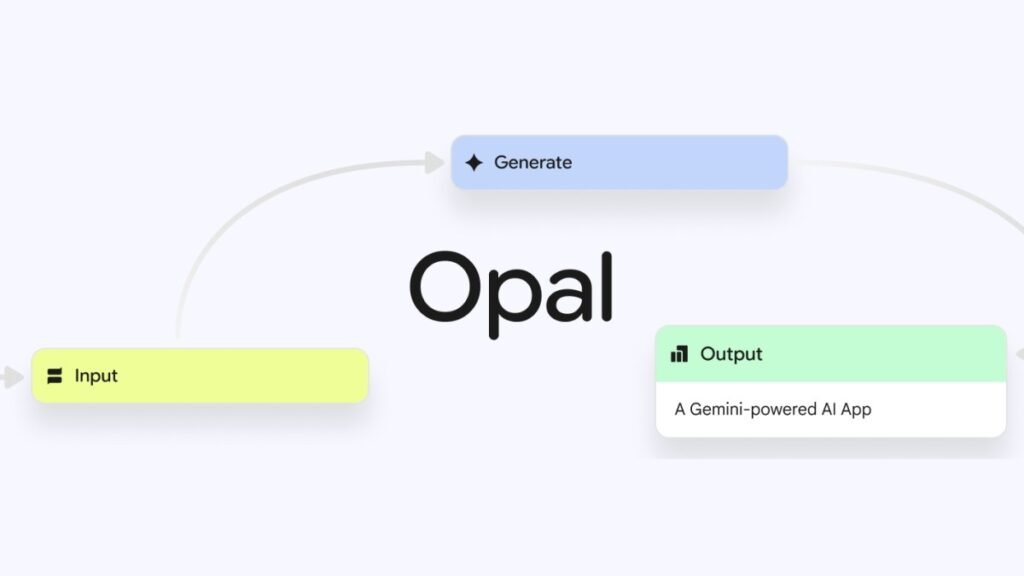
Once an app is generated, Opal provides a detailed editor panel that maps out the visual workflow, including input, output, and generation stages. This transparency allows users to click through individual steps to inspect or modify the underlying prompts. Furthermore, the interface includes a toolbar that enables users to manually add or adjust steps to refine the application’s behavior.
Collaboration and Market Positioning
Beyond creation, Opal facilitates easy distribution. Users can publish their web apps and share a direct link, allowing others to test the projects using their own Google accounts. While Google’s AI studio already caters to developers, Opal’s intuitive, visual-first approach suggests a strategic move to capture a broader, non-technical audience.
By launching Opal, Google is positioning itself to compete directly with platforms like Replit, Figma, and Canva. These competitors are all racing to democratize software prototyping, enabling individuals without formal programming backgrounds to bring their digital concepts to life with minimal friction.