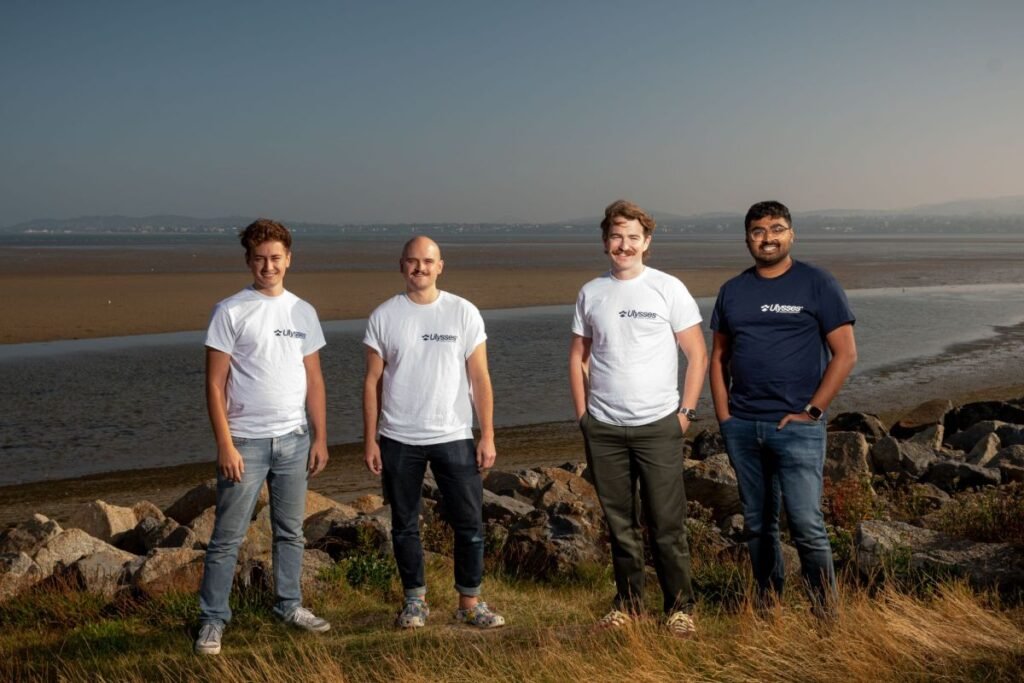
Startup Ulysses has exited stealth mode with $2 million in pre-seed funding, led by Lowercarbon Capital, to deploy autonomous robots capable of restoring vital seagrass meadows. The funding round also saw participation from Superorganism, ReGen Ventures, and several angel investors, providing the capital necessary to expand the company’s five-person team with new engineering and go-to-market talent.
Capitalizing on Global Restoration Mandates
Ulysses enters the market as international policy shifts toward urgent environmental recovery. Governments are increasingly prioritizing the restoration of marine ecosystems, highlighted by the European Union’s new regulation passed earlier this year. This framework mandates the restoration of critical habitats by 2030 and 2050, with seagrass explicitly identified as a priority for ecological health.
Robotic Innovation in Marine Environments
The startup is moving quickly to prove its technology in the field. According to leadership, the company will begin testing a specialized robotic capability this month: the autonomous harvesting of seeds from established seagrass beds, followed by the precise replanting of those seeds in areas where restoration is required.
Beyond Seagrass: A New Frontier for Coastal Tech
While seagrass restoration serves as the current proof of concept, co-founder Will O’Brien views the technology as a foundation for broader maritime applications. The core architecture consists of autonomous drones tethered to a central platform, a design intended to eventually scale into coastal management, security, and diverse environmental restoration projects.
“The oceans really are this frontier in humanity that is extremely under explored,” O’Brien stated. “There is not a lot of novel technological solutions and it’s because it’s an extremely difficult domain, dealing with currents, [it’s] very unforgiving when you have all these things. [We want to] bring SpaceX levels of innovation to this new domain here on earth.”
Competitive Landscape and Future Vision
Ulysses joins a growing field of innovators tackling the complexities of the ocean floor. Other notable players include Terradepth, which has secured over $30 million in venture capital to map the seafloor for commercial and government use, and the Norwegian firm Eelume, which specializes in advanced ocean discovery.
Looking ahead, the company aims to scale its operations significantly. “In five years, we don’t want to just be doing seagrass restoration, we want to be managing hundreds of kilometers of coastline,” said Voorakkara. “We want to supercharge groups like NOAA, the U.S. Coast Guard, and everyone working on serving the ocean and protecting it in a much more efficient manor.”