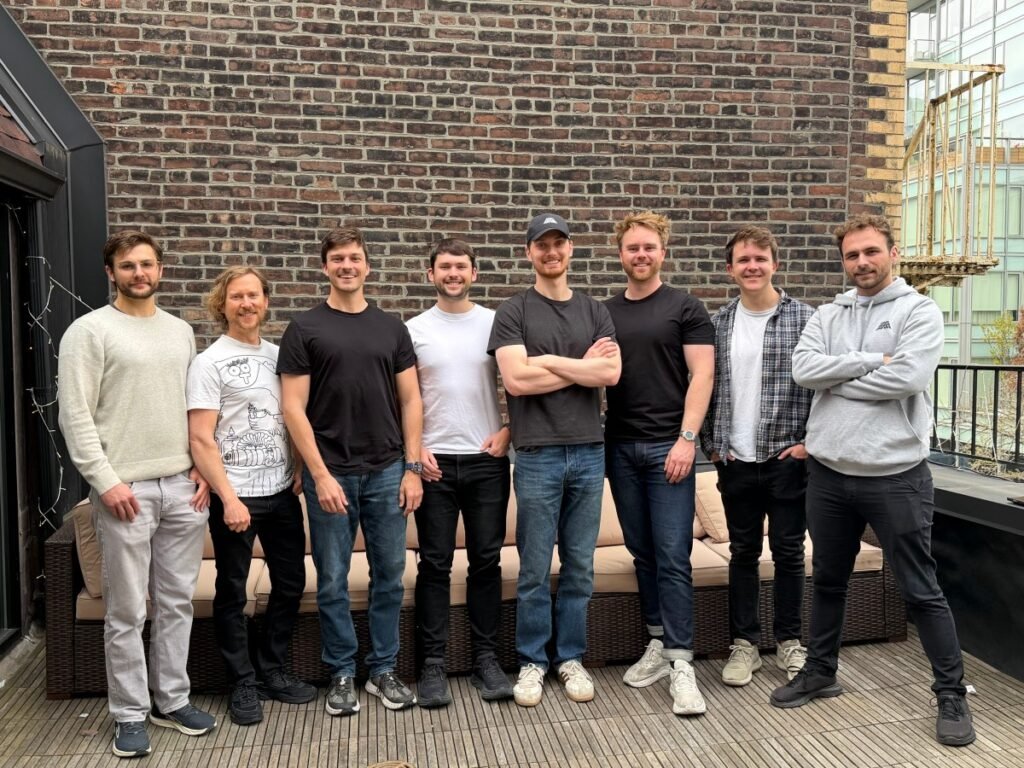
Startup Antioch is positioning itself as the “Cursor for physical AI,” providing a simulation platform that enables robotics companies to test autonomous systems without the massive capital required for physical testing arenas or fleets of sensor-equipped vehicles. By allowing developers to spin up digital instances of their hardware, Antioch aims to bridge the gap between software development and real-world deployment for firms that lack the resources of tech giants.
Scaling Robotics Through High-Fidelity Simulation
“The vast majority of the industry doesn’t use simulation whatsoever, and I think we’re now just really understanding clearly that we need to move faster,” says Antioch’s leadership. The platform functions similarly to the AI-powered coding tool Cursor, connecting simulated sensors to robot software to mimic real-world data inputs. This environment allows developers to stress-test edge cases, conduct reinforcement learning, and generate synthetic training data.
The critical hurdle remains maintaining high-fidelity physics; if the simulation doesn’t mirror reality, the transition to physical machines risks failure. To counter this, Antioch integrates models from industry leaders like Nvidia and World Labs, refining them with domain-specific libraries. By aggregating data across multiple customers, the company claims it gains a depth of context that individual physical AI firms cannot replicate alone.
The High Stakes of Physical AI
“What happened with software engineering and LLMs is just starting to happen with physical AI,” notes Çağla Kaymaz, a partner at Category Ventures. While bad coding tools in traditional software might cause digital glitches, the stakes in the physical realm are significantly higher, necessitating more robust development infrastructure.
Currently, Antioch focuses primarily on sensor and perception systems for autonomous cars, trucks, construction machinery, and drones. Although generalized human-like robotics remain a distant goal, Antioch has already attracted interest from both startups and large multinational corporations heavily invested in the robotics space.
Building the Toolchain for Autonomous Systems
Adrian Macneil, former Cruise executive and founder of Foxglove, is backing Antioch as an angel investor, citing the impossibility of logging enough miles in the real world to build a comprehensive safety case. Macneil advocates for an “off-the-shelf” toolchain for physical AI, similar to the SaaS revolution sparked by platforms like GitHub, Stripe, and Twilio.
“We genuinely all think that anyone building an autonomous system for the real world is going to do so in software primarily in two to three years,” Antioch’s team stated, highlighting the potential for autonomous agents to iterate on physical systems and close the feedback loop effectively.
Benchmarking the Next Generation of AI
The platform is already fueling advanced research, such as experiments by David Mayo at MIT’s Computer Science and Artificial Intelligence Laboratory. Mayo uses Antioch to evaluate LLMs by having them design robots and compete in simulated environments, such as pushing rival bots off a platform. This realistic sandbox provides a novel paradigm for benchmarking AI performance.
As the industry works to close the gap between digital models and physical reality, the goal is to create the kind of data flywheel that has driven the success of industry leaders like Waymo. By providing these essential tools, Antioch offers a path for other companies to replicate that success—whether they choose to build their infrastructure from scratch or adopt a specialized platform.