Nvidia is set to launch Jetson Thor, a new generation of compact computers designed specifically for humanoid robots, in the first half of 2025, according to reports from the Financial Times.
A Strategic Shift Toward Robotics
This development marks a significant acceleration in the chipmaking giant’s long-term robotics strategy. Rather than entering the market as a direct competitor to manufacturers like Tesla, Nvidia is positioning itself as the foundational technology provider. As Deepu Talla, Nvidia’s vice president of robotics, noted during a recent press event in Tokyo, the company aims to supply the “hundreds of thousands” of robotics developers globally with the necessary OEM hardware.
The Technological Catalyst
According to Talla, the timing of this rollout is driven by two major technological breakthroughs. The rapid explosion of generative AI models, combined with the capability to train robots using advanced simulated environments, has created the perfect conditions for the deployment of Jetson Thor.
Diversification Amid Market Pressure
While Nvidia focuses on its role as a robotics enabler, industry analysts point to another underlying factor: the need to diversify. As major tech players like Amazon and Google ramp up efforts to develop their own internal AI chips, Nvidia is strategically expanding into the robotics sector to reduce its reliance on traditional data center chip demand.
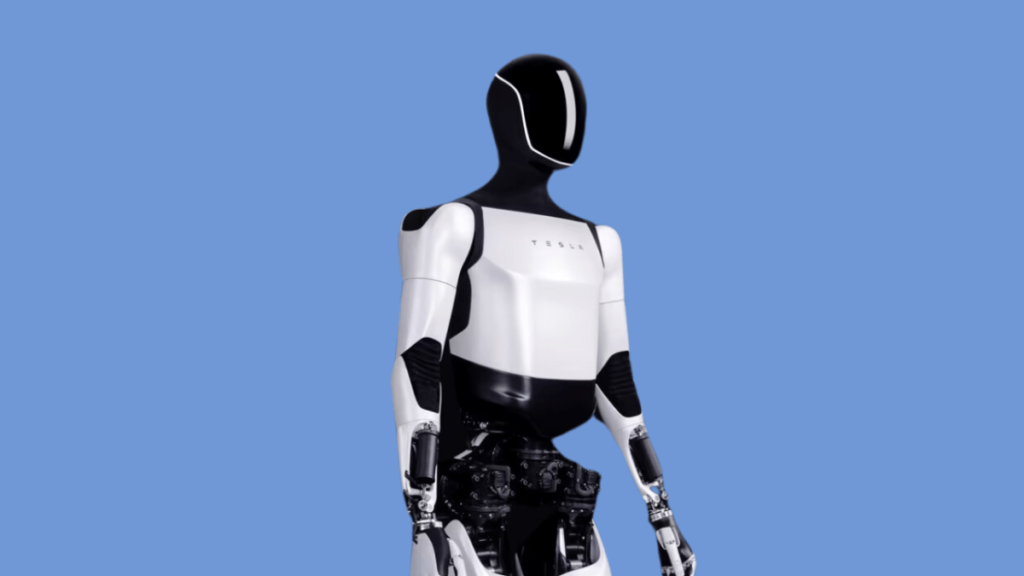
Above: Tesla’s humanoid robot, Optimus; Nvidia has said it supplies Tesla with tech to build the machines.