
Meta is aggressively courting mobile developers by introducing new support for Android applications on the Quest platform, aiming to simplify the development process for Horizon OS while expanding its ecosystem.
Addressing Developer Friction
During a recent address, Meta’s CTO, Andrew “Boz” Bosworth, acknowledged the volatile nature of the industry. “The thing that you all have the most in common is that the ground has been constantly shifting under your feet for years now,” Bosworth noted. He admitted that the transition to new technologies has been a “tough ride” for developers, and Meta’s latest updates are designed to alleviate these pain points through better toolsets and broader access to open-source AI resources.
Expanding Web and Spatial Capabilities
Meta is also pivoting toward developers who are weary of traditional app ecosystems by enhancing spatial improvements for browsers and WebXR. By leveraging the open web, Meta allows applications to function with background audio and multitasking capabilities. Spotify serves as a primary example of this, offering a seamless web-based experience that operates over other applications on the headset.
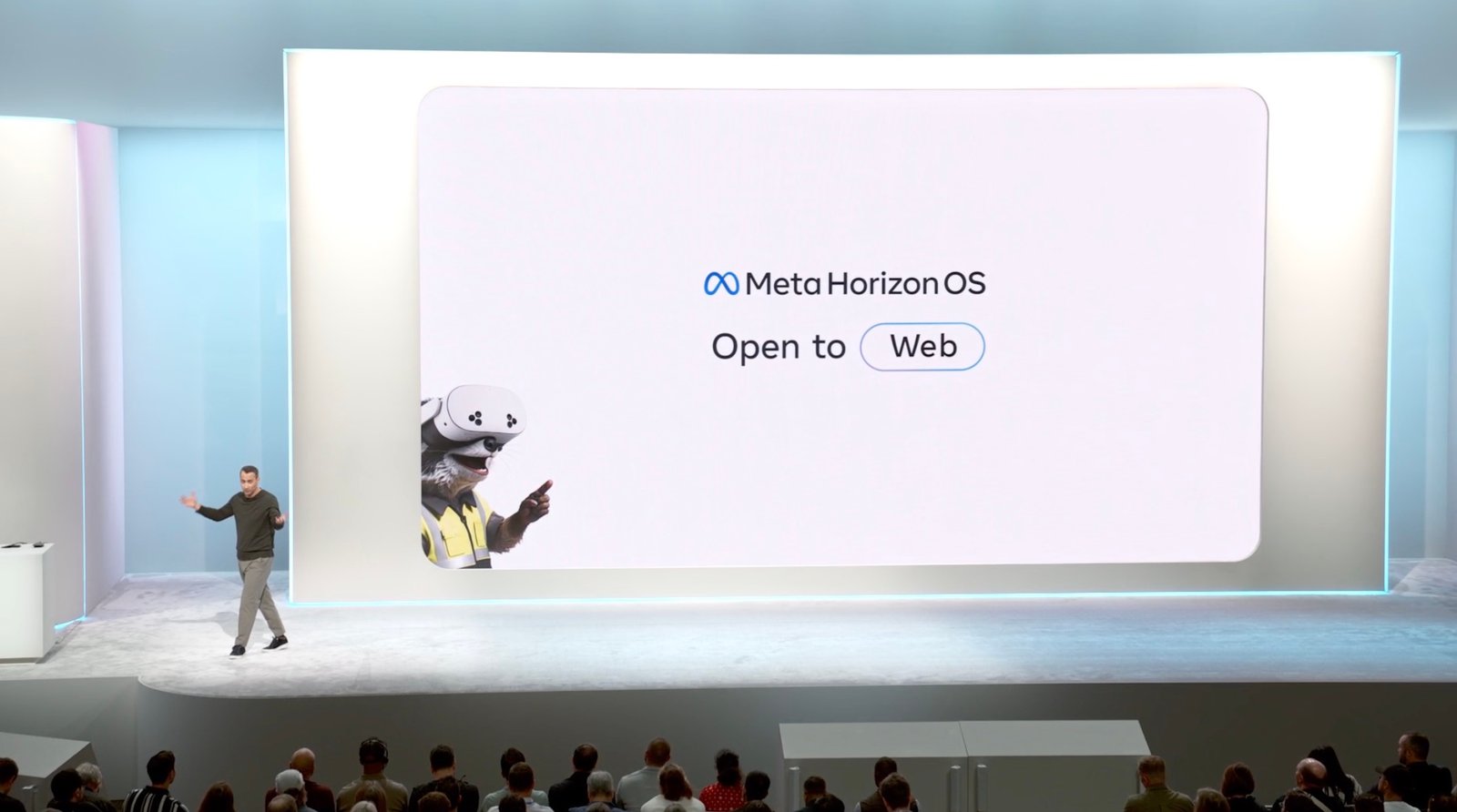
Furthermore, the New York Times’ Wordle has been highlighted as a Progressive Web App that now receives full store integration, including native discovery and in-app payment support.
Monetization and Strategic Positioning
By streamlining the onboarding process for developers, Meta is not only enriching its app library but also establishing a sustainable revenue stream. Similar to the models employed by Apple and Google, Meta takes a commission on in-app purchases and sales.
CEO Mark Zuckerberg continues to position Meta as the “open” alternative to Apple’s walled-garden approach. During an interview on the Acquired podcast, Zuckerberg framed the current industry climate as an ideological struggle. “I think over the next 10, 15 years, that kind of battle over — ideological battle over — what should the architecture be of the next set of platforms? Are they going to be the closed, integrated Apple model that Apple has always done?” Zuckerberg stated, emphasizing that there are multiple valid paths for platform development.