
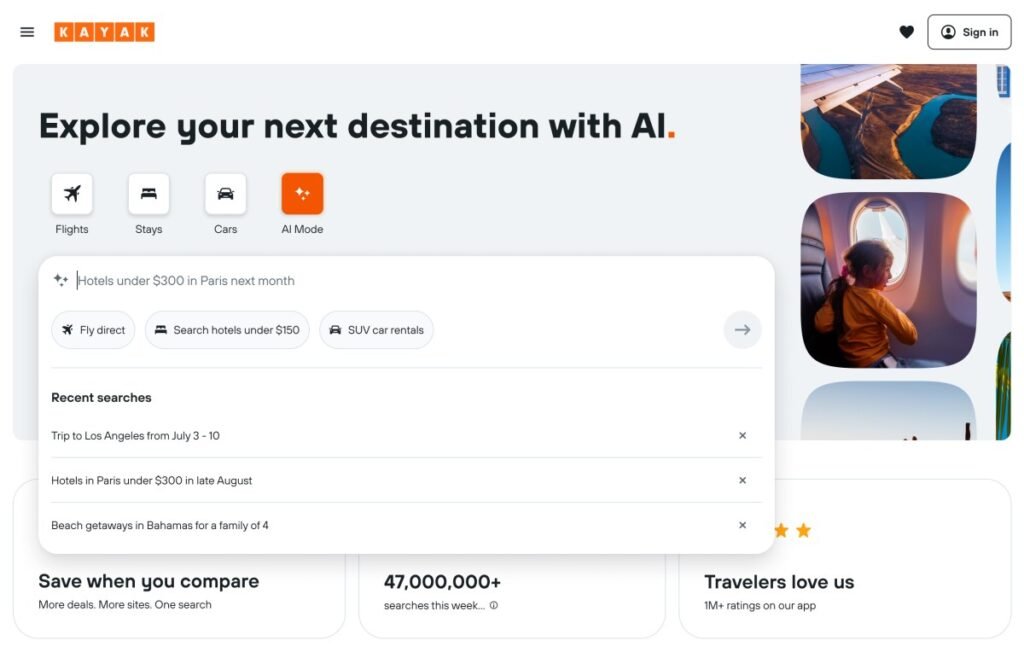
Travel search engine Kayak has officially integrated an “AI Mode” into its platform this week, enabling users to research, compare, and book flights, hotels, and rental cars through a conversational AI chatbot.
Enhanced Search Capabilities
The new feature is currently live on both desktop and mobile web, leveraging Kayak’s deep integration with ChatGPT to provide highly contextual results. This rollout follows the company’s April introduction of Kayak.ai, a dedicated testing ground where developers refined AI tools before bringing them to the main Kayak.com ecosystem.
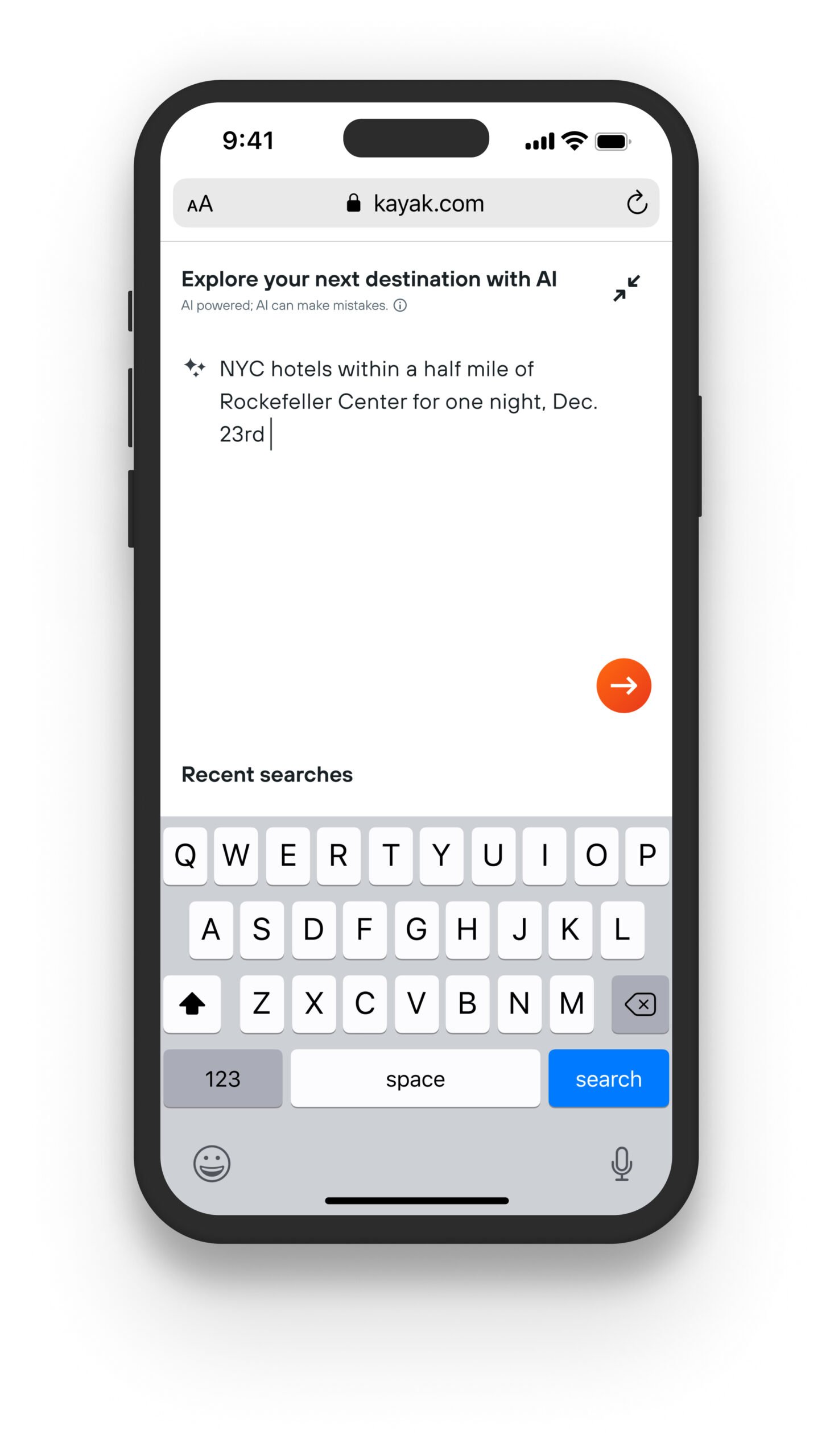
Essentially, the AI Mode feature mirrors the functionality previously tested on Kayak.ai. Users can now input complex travel queries, such as searching for destinations under a specific budget, comparing hotel amenities, or identifying the most convenient nonstop flight options.
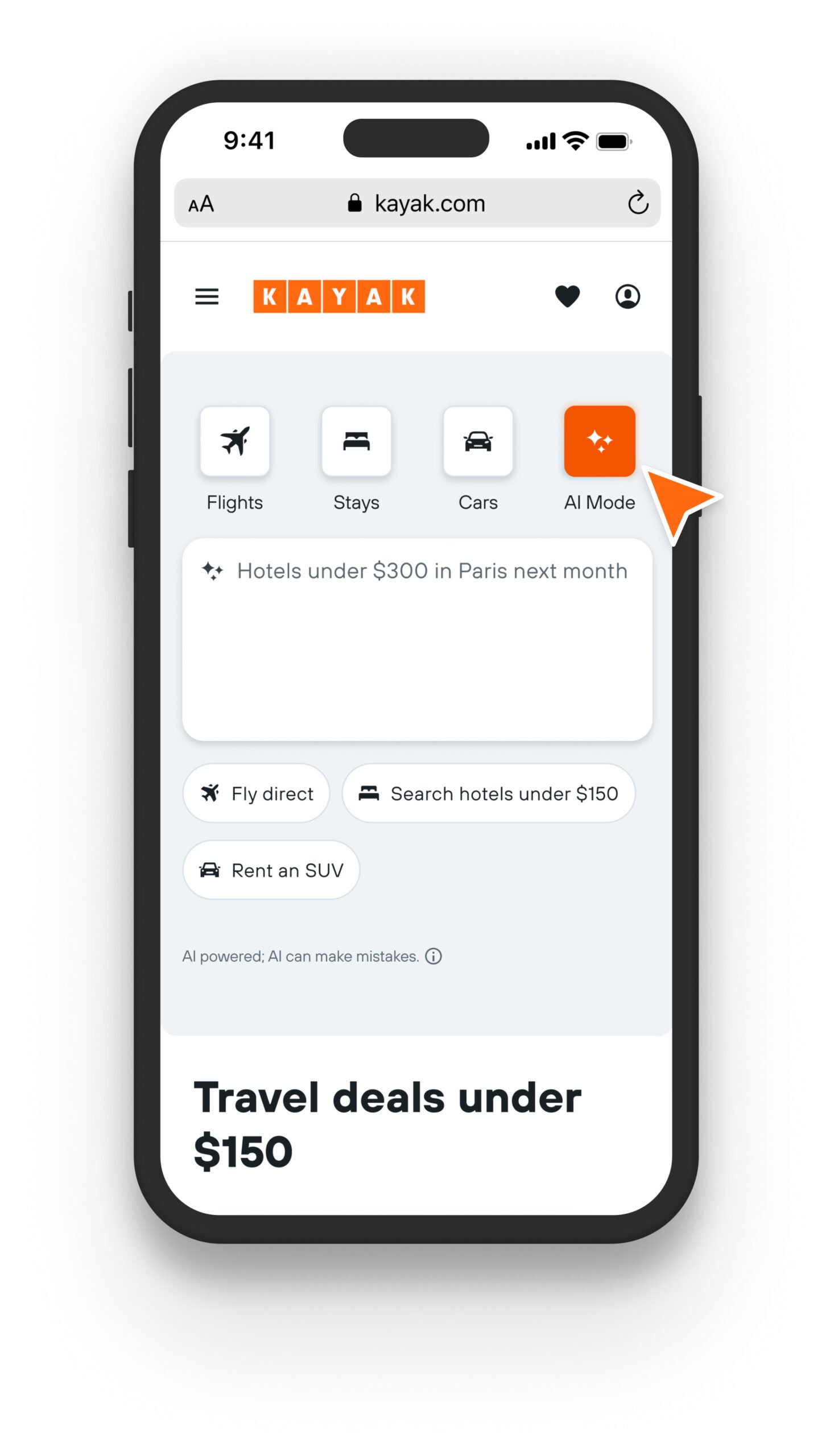
Beyond Simple Searches
The AI tool is designed to handle open-ended inspiration requests, such as “I want to party for NYE — where should I go?” It can also provide data-driven advice, like determining the optimal time to book a flight based on current ticket price trends.
While this feature aims to simplify the early stages of travel planning, the industry is still observing whether these AI interactions will effectively convert casual browsers into paying customers.
Availability and Future Roadmap
Currently, AI Mode is available in English for users in the United States. Kayak intends to expand language and regional support later this month, with plans to introduce voice-based requests and cross-platform integration in the near future.
Competitive Landscape
The travel sector is rapidly embracing AI to alleviate the often tedious online booking experience. Competitors like Expedia and Booking.com—the latter sharing a parent company, Booking Holdings, with Kayak—have already partnered with OpenAI to integrate their services directly into the ChatGPT interface.
By choosing to host the AI chatbot directly on its own domain, Kayak distinguishes its strategy, potentially gaining more granular, first-party data regarding how consumers interact with AI for travel planning.