
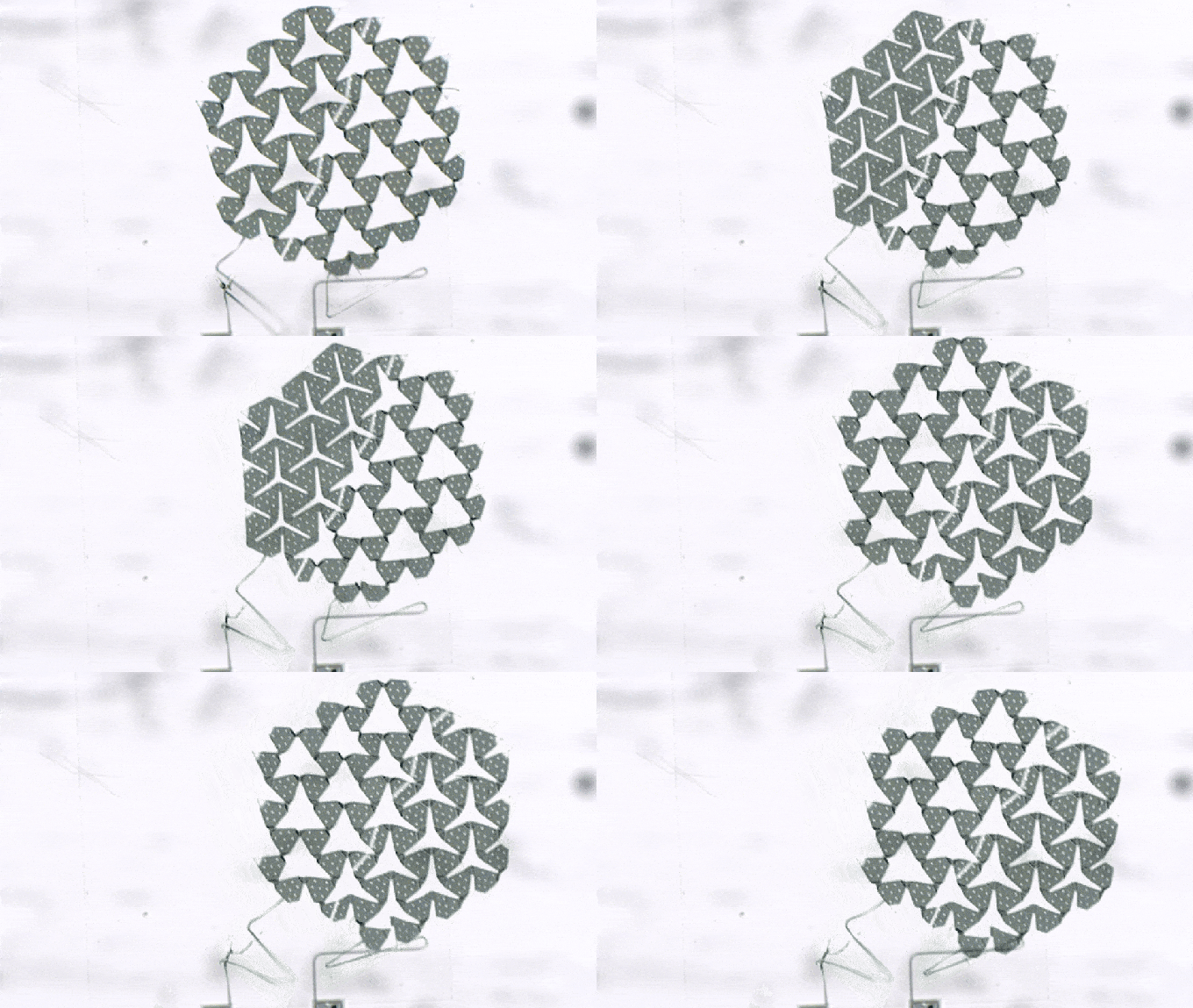
Researchers at Cornell University have successfully developed sub-1mm “metasheet” robots that autonomously transform their shape and crawl when triggered by an electric current. Detailed in a study published this week, these microscopic machines utilize principles of kirigami—an evolution of origami that incorporates cutting—to achieve complex movement and structural reconfiguration.
Engineering at the Nanoscale
The term “metasheet” is derived from the field of metamaterials, reflecting the sophisticated composition of these tiny devices. Each robot is constructed from 100 individual silicon dioxide panels, each measuring just 10 nanometers in thickness. These panels are connected by flexible hinges that allow the structure to maintain integrity while undergoing significant physical deformation.
Electrochemical Propulsion and Movement
The mechanism behind the transformation is rooted in electrochemistry. When an electric charge is applied, the robots initiate a reaction that causes the panels to expand or contract. This process allows the metasheets to alter their total size by up to 40%. By precisely controlling these inputs, the researchers can dictate the robots’ shape and command them to crawl across surfaces, bridging the gap between static material science and active, programmable robotics. You can read more about the technical specifications of this development in the official research publication.