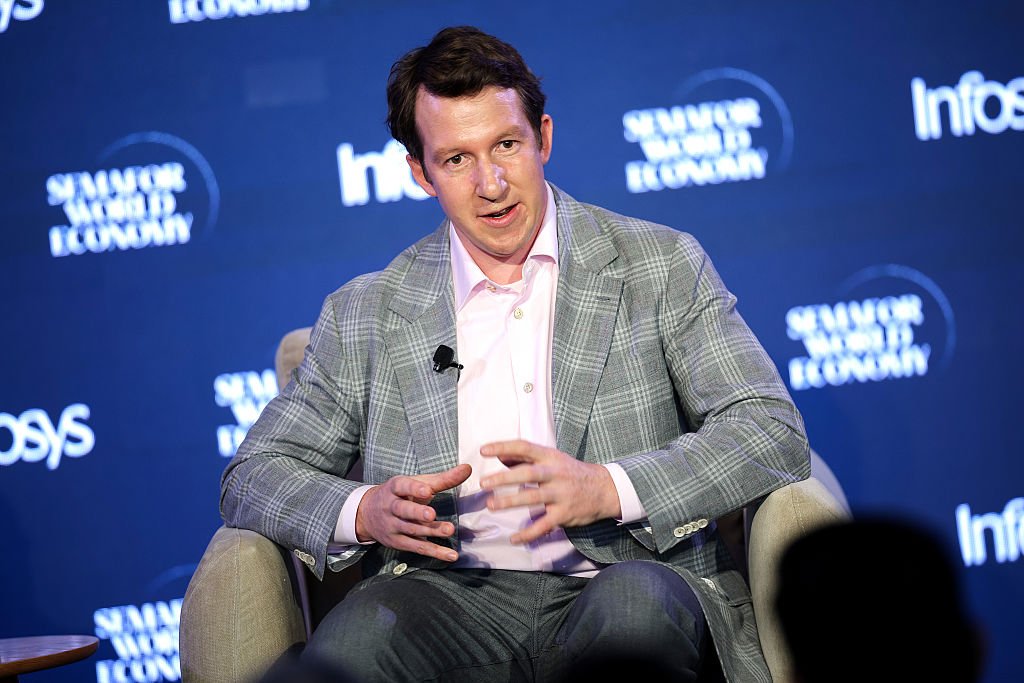
Jack Clark, co-founder and Head of Public Benefit at Anthropic, confirmed this week that the company has briefed the Trump administration on its highly advanced Mythos model, despite ongoing legal tensions between the two parties.
Why Mythos Remains Behind Closed Doors
Announced last week, the Mythos model remains restricted from public access. Anthropic has withheld the release primarily due to the AI’s exceptionally powerful cybersecurity capabilities, which the company deems too dangerous for general deployment.
Navigating a Complex Relationship with the Pentagon
During an interview at the Semafor World Economy summit, Clark addressed the friction between Anthropic and the U.S. government. In March, Anthropic initiated a lawsuit against the Department of Defense (DOD) after the agency classified the firm as a “supply-chain risk.” The dispute stemmed from Pentagon requirements for unrestricted access to Anthropic’s systems for use in autonomous weapons and mass surveillance—a contract that was ultimately awarded to OpenAI.
Clark characterized the DOD conflict as a “narrow contracting dispute,” emphasizing that it does not diminish Anthropic’s commitment to national security. “Our position is the government has to know about this stuff, and we have to find new ways for the government to partner with a private sector that is making things that are truly revolutionizing the economy,” Clark stated. “So absolutely, we talked to them about Mythos, and we’ll talk to them about the next models as well.”
Wall Street Interest and Government Oversight
Clark’s confirmation follows recent reports indicating that Trump officials have encouraged major financial institutions—including JPMorgan Chase, Goldman Sachs, Citigroup, Bank of America, and Morgan Stanley—to begin testing the Mythos model.
The Economic Outlook and Future of Employment
Beyond national security, Clark weighed in on the broader societal impacts of AI, specifically regarding unemployment and the future of education. While Anthropic CEO Dario Amodei previously warned that AI could drive unemployment to Depression-era levels, Clark offered a more nuanced perspective, noting that Amodei’s projections are based on the assumption of rapid, exponential gains in AI power.
As the leader of Anthropic’s internal team of economists, Clark reported that the company currently observes only “some potential weakness in early graduate employment” within specific sectors. However, he confirmed that the organization remains prepared should significant labor market shifts occur.
Preparing Students for an AI-Driven World
When asked for advice on academic paths in the age of AI, Clark steered away from recommending specific majors. Instead, he emphasized the necessity of interdisciplinary skills. “The most important majors are those that involve synthesis across a whole variety of subjects and analytical thinking about that,” he explained.
Clark argued that because AI provides access to vast amounts of domain-specific expertise, the human value proposition has shifted. “The really important thing is knowing the right questions to ask and having intuitions about what would be interesting if you collided different insights from many different disciplines.”