Amazon unveiled plans for a new generation of highly automated fulfillment centers at its “Delivering the Future” event this Wednesday, signaling a shift toward robot-centric logistics. The flagship facility, located in Shreveport, Louisiana, is a massive 3-million-square-foot complex spanning five floors—an area roughly equivalent to 55 football fields, according to the company.
A New Era of Robotic Fulfillment
This initiative marks the evolution of Amazon’s robotics strategy, which began with the 2012 Kiva acquisition. While the retail giant previously focused on integrating robots into existing workflows to maintain operational continuity, this new model adopts a “greenfield” approach, building infrastructure specifically designed for advanced robotics and AI from the ground up.
Scaling Up Automation
Though Amazon has not disclosed the exact number of units, the company confirmed that these new facilities will deploy 10 times more robots than a standard fulfillment center. This is a significant leap, considering Amazon already operates nearly one million robotic systems across its U.S. network.
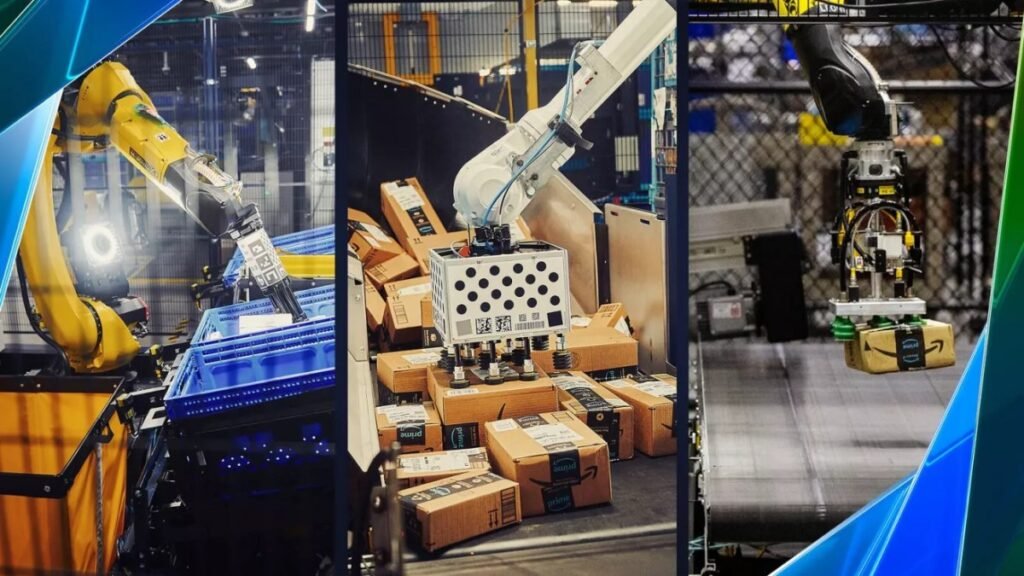
The facility will integrate a suite of technologies, including Kiva-style autonomous mobile robots (AMRs) and specialized robotic arms like Robin, Cardinal, and Sparrow. Central to this operation is “Sequoia,” a sophisticated, multilevel containerized inventory system. Amazon notes that this version of Sequoia is five times larger than the one deployed in Houston last year, with the capacity to store over 30 million items.
Integrating AI and Human Labor
The company’s recent August hiring of Covariant founders Pieter Abbeel, Peter Chen, and Rocky Duan is expected to be instrumental in deploying advanced AI across these systems. The Shreveport site serves as a critical proving ground for these diverse robotic platforms to operate in tandem—a challenge that has historically been difficult to solve due to the complexity of hardware-agnostic communication.
Despite the increased reliance on automation, Amazon maintains that human oversight remains essential. The company states that the Louisiana fulfillment center is expected to employ 2,500 people once it reaches full operational capacity.