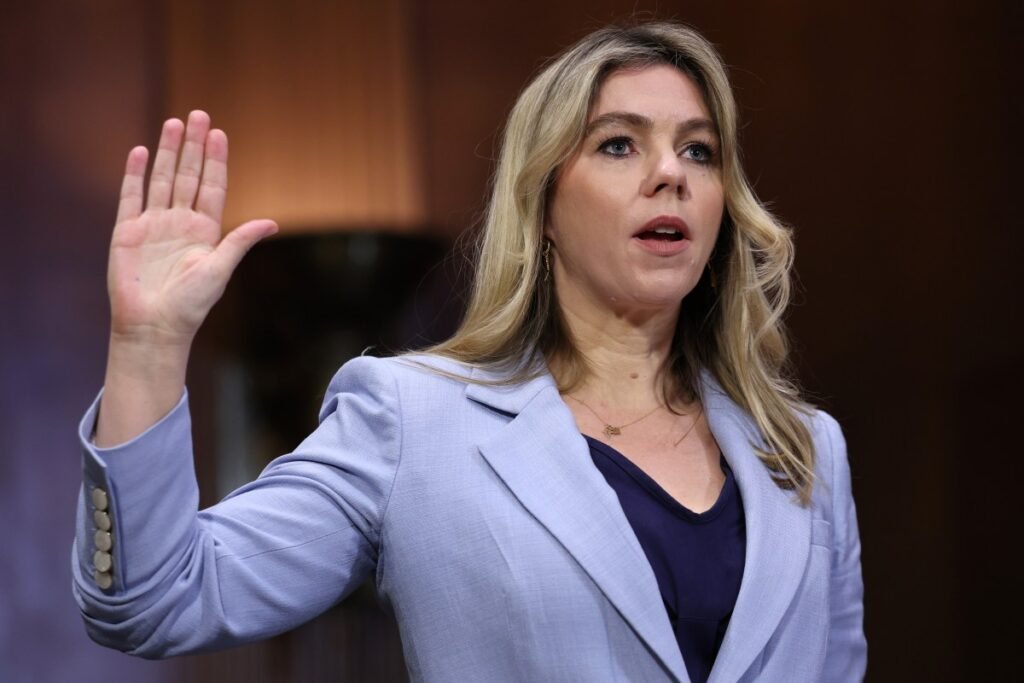
Former Meta executive Sarah Wynn-Williams has testified before Congress, alleging that the tech giant maintained deep, undisclosed ties with the Chinese government, including potential access to sensitive user data during periods of political unrest.
The Hidden Revenue Stream
During her tenure, which concluded in 2017, Facebook launched the photo-sharing applications Colorful Balloons and Moments within China. While Meta maintains that these activities have been previously reported and that it openly discloses advertising revenue from the region in regulatory filings—despite its core platforms being banned there—Wynn-Williams asserts the partnership goes far beyond simple ad sales.
According to Meta’s own 10-K filing, the company generated $18.3 billion in revenue from China in 2024, a significant increase from $13.69 billion in 2023 and $7.4 billion in 2022.
Data Access and Political Tensions
Wynn-Williams provided internal documentation to Congress, some of which was presented in redacted form by Senator Josh Hawley (R-MO) during the hearing. Among the evidence were emails suggesting that Facebook executives discussed granting the Chinese Communist Party (CCP) access to user data from both China and Hong Kong.
“Facebook appears to have been willing to provide the data of users in Hong Kong to the Chinese government at a time when pro-democracy protesters were opposing Beijing’s crackdown,” Senator Richard Blumenthal (D-CT) stated during the hearing. When asked to confirm the validity of this claim, Wynn-Williams testified that it was accurate.
Censorship Tools and Technology Sharing
The whistleblower detailed the implementation of sophisticated censorship mechanisms. “As part of the censorship tool that was developed, there were virality counters — so any time a piece of content got over 10,000 views, that would automatically trigger it being reviewed by what they called the chief editor,” she explained. “What was particularly surprising is that the virality counters were not just installed, but activated in Hong Kong and also in Taiwan.”
Senator Blumenthal noted that this contradicts previous sworn testimony from Mark Zuckerberg, who had denied that Facebook built censorship tools specifically to enter the Chinese market.
Wynn-Williams further warned that any data sharing with the Chinese government would likely compromise American users as well, noting that from a technical perspective, there would be no way to isolate Chinese user data from that of Americans who interacted with them. Additionally, she claimed Meta briefed Chinese officials on advancements in artificial intelligence and facial recognition technologies.
A Critique of Corporate Patriotism
Reflecting on the company’s leadership, Wynn-Williams offered a sharp critique of Meta’s public image. “The greatest trick Mark Zuckerberg ever pulled was wrapping the American flag around himself and calling himself a patriot, and saying he didn’t offer services in China, while he spent the last decade building an 18 billion-dollar business there,” she told the Senate.
“And he continues to wrap the flag around himself as we move into the next era of artificial intelligence,” she concluded.