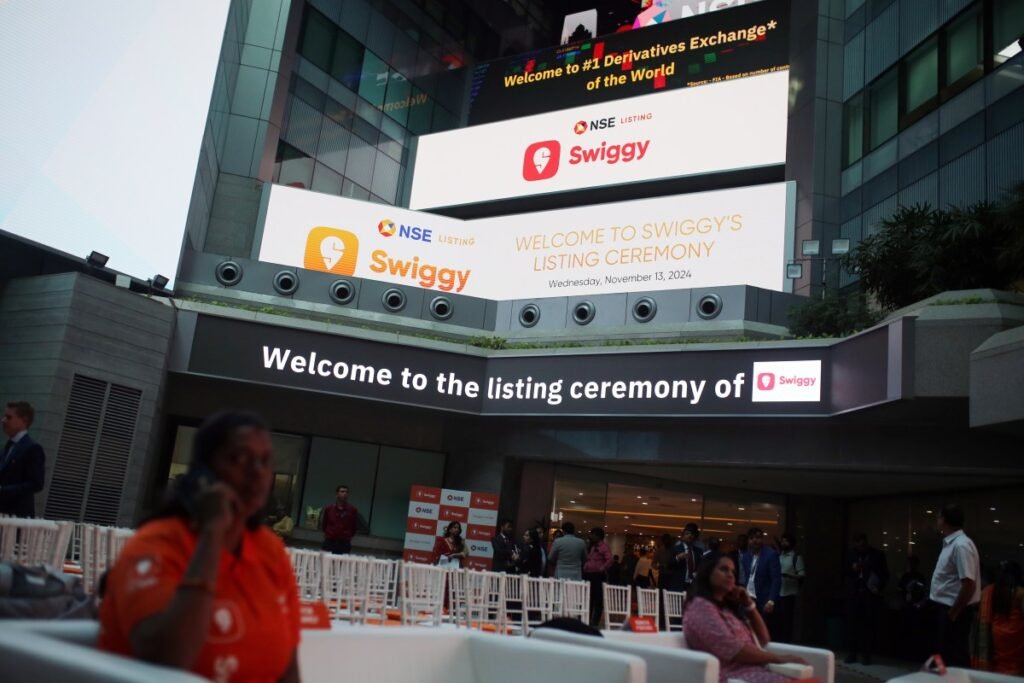
Swiggy has officially launched the largest tech IPO of 2024 globally, successfully defying a sluggish market environment to secure its position as a major player in India’s high-stakes delivery landscape.
The Quick-Commerce Rivalry
The competitive divide is most evident within the rapidly expanding quick-commerce sector, where platforms promise delivery of groceries, wellness items, and beauty products in under 15 minutes. Currently, Swiggy’s Instamart service serves 5.2 million monthly users, trailing behind the Zomato-owned Blinkit, which boasts 7.6 million monthly active users.
Profitability Challenges vs. Market Share
For public market investors, the path to profitability remains the critical differentiator. While Blinkit has successfully reached adjusted EBITDA break-even, Instamart continues to operate at a loss, even when measured at the contribution margin level.
Analysts at JM Financial expressed caution regarding Swiggy’s valuation in a report released this Wednesday. “We believe each of Swiggy’s business segments deserves a lower target valuation multiple compared to Zomato’s due to poor execution in the past, which has led to a widening market share gap,” the firm noted.
The $42 Billion Opportunity
Despite internal hurdles, the broader market outlook remains bullish. Morgan Stanley projects that the gross order value in India’s quick-commerce sector could hit $42 billion by 2030, accounting for more than 18% of the nation’s total e-commerce market. The sector has demonstrated remarkable resilience and growth, expanding at an annual rate of 77% since the pandemic began.
Supporting this growth, JPMorgan reports that quick-commerce platforms have already seized 56% of the online grocery delivery market, effectively displacing traditional e-commerce incumbents.
Market Hurdles and Future Viability
The road ahead for Swiggy is not without significant pressure. Competition is heating up as retail giants, including Flipkart and Reliance’s JioMart, aggressively roll out their own rapid delivery infrastructure. Furthermore, industry experts continue to question the long-term viability of the quick-commerce model beyond major metropolitan areas, citing the heavy reliance on dense, localized warehouse networks as a potential scalability bottleneck.