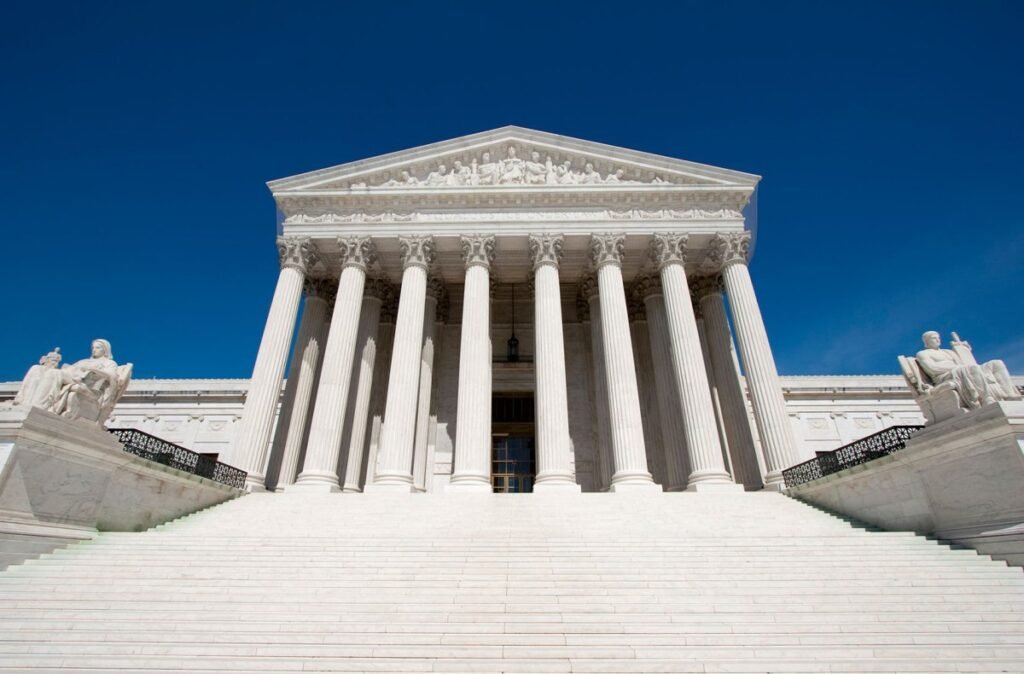
The U.S. Supreme Court vacated two major judicial rulings on Monday regarding Republican-led legislation in Texas and Florida, effectively blocking the states’ attempts to restrict how social media platforms moderate online content.
Lower Courts Failed the First Amendment Test
The Supreme Court has remanded both cases back to lower courts, citing a failure to adequately address the First Amendment implications inherent in these state laws. The justices concluded that the initial judicial reviews were insufficient to determine whether the statutes could withstand constitutional scrutiny.
In the official decision, Justice Elena Kagan emphasized that the lower courts bypassed a critical step: “The question in such a case is whether a law’s unconstitutional applications are substantial compared to its constitutional ones. To make that judgment, a court must determine a law’s full set of applications, evaluate which are constitutional and which are not, and compare the one to the other. Neither court performed that necessary inquiry.”
Origin of the Content Moderation Dispute
Passed in 2021, the legislation in both states was a direct response to allegations from conservative lawmakers claiming that platforms like Facebook and X (formerly Twitter) were engaging in systematic censorship. These tensions reached a boiling point following the suspension of former President Donald Trump’s accounts in the wake of the January 6 Capitol riot.
The proposed laws sought to strip social media companies of their ability to remove specific political posts or ban users based on their content. At the heart of the legal battle was the fundamental question of whether private tech companies possess the editorial discretion to moderate hate speech, electoral misinformation, and spam on their own infrastructure.
Tech Industry Challenges State Authority
NetChoice, a prominent trade association representing major tech firms, spearheaded the legal challenge against these measures. The group argued that the laws constitute an unconstitutional government overreach, infringing upon the platforms’ own First Amendment rights by forcing them to host content against their editorial standards.
Prior to the Supreme Court’s intervention, the legal landscape was fractured: federal courts had blocked key provisions of the Florida law, while the Texas statute had been partially upheld. Currently, neither law is in effect, as both remain under judicial hold while the legal process continues in the lower courts.