
Google is revolutionizing the e-commerce experience in the U.S. by launching its new “Shop with AI” mode, featuring agentic checkout capabilities, real-time price tracking, and advanced virtual try-on technology.
Seamless Agentic Checkout
The new shopping suite simplifies the purchasing process significantly. Once a user clicks the buy button, Google automatically adds the selected item to the merchant’s checkout cart and utilizes saved Google Pay credentials to secure the transaction, streamlining what is typically a multi-step process.
This automated checkout functionality is rolling out initially for product listings within the United States.
Personalized Virtual Try-On Technology
Beyond transaction efficiency, Google is enhancing its fashion retail tools by allowing users to virtually try on clothing using their own likeness. While the company previously showcased items on a diverse range of models, this update marks a shift toward personal visualization.
To utilize this feature, users must upload a full-length, well-lit photograph while wearing fitted clothing. Google employs a sophisticated new diffusion model designed to analyze human anatomy, predicting how various fabrics drape, fold, and stretch on different body types.
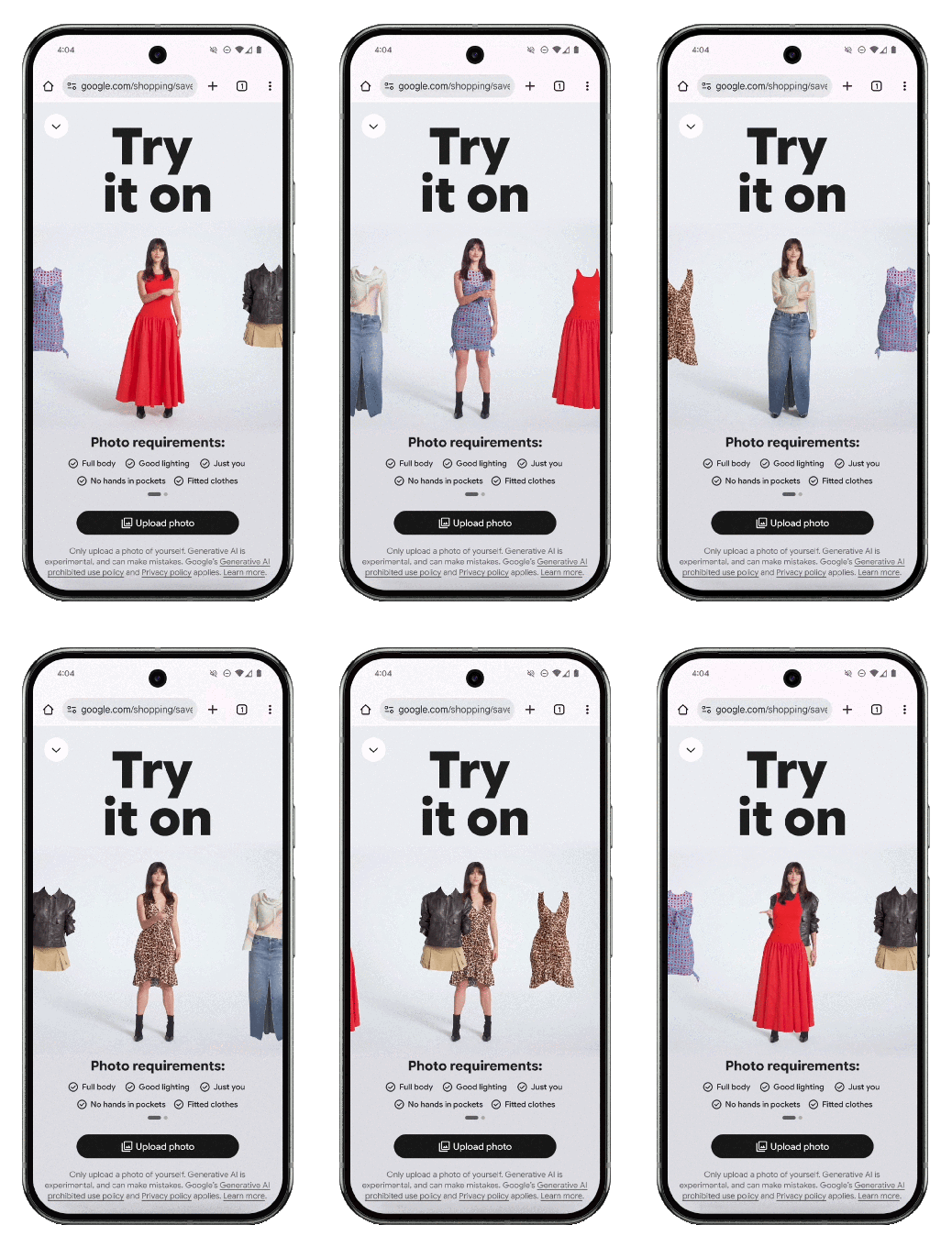
The virtual try-on feature is accessible starting today for U.S. users via Google’s Search Labs. Participants will see a virtual try-on icon next to listings for dresses, skirts, pants, and shirts. Additionally, the interface allows users to share their generated looks with friends or explore similar style recommendations.
Competitive Landscape in AI Retail
Google’s aggressive expansion into AI-driven retail places it in direct competition with numerous startups and AI platforms.
Specialized firms such as Doji and Vybe are currently developing their own virtual try-on solutions, while companies like Daydream, Cherry, and Deft are focusing their AI efforts on improving product discovery for consumers. Furthermore, general-purpose AI platforms, including ChatGPT and Perplexity, have also integrated shopping-specific features into their ecosystems in recent months, signaling a broader industry shift toward agentic AI in retail.