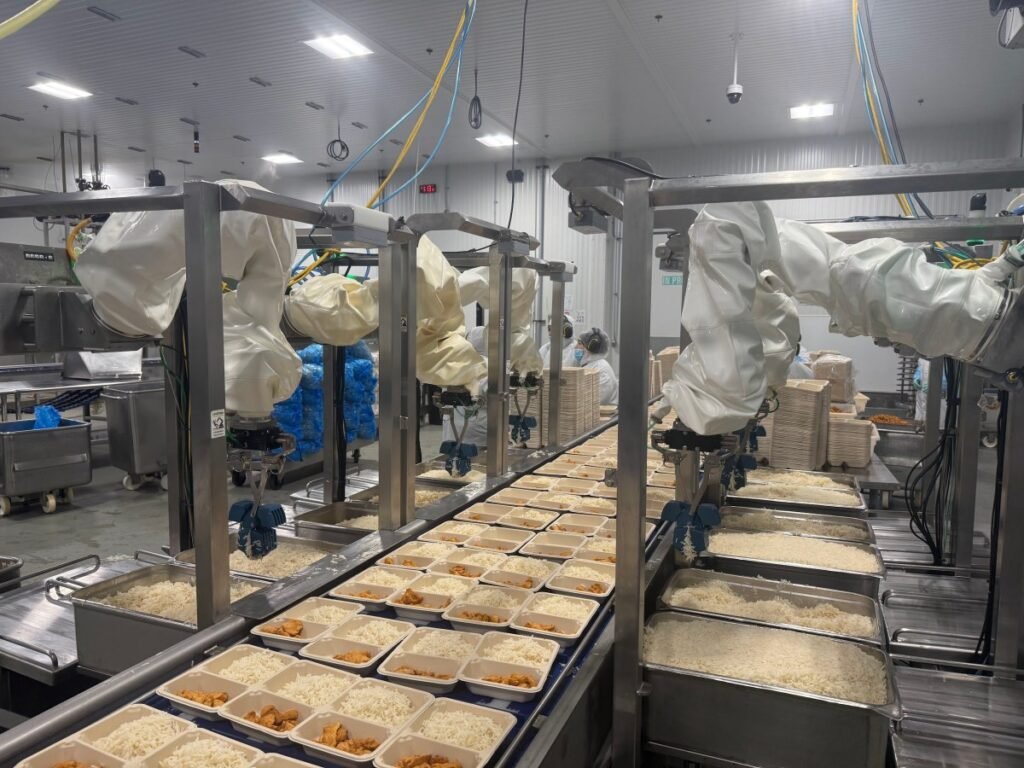
Chef Robotics has reached a significant milestone of 100 million food servings processed, proving that its AI-driven automation strategy can survive in an industry graveyard littered with failed startups like Chowbotics and Zume. By shifting focus from fast-casual dining to large-scale food manufacturing, CEO Rajat Bhageria has successfully scaled the company to serve enterprise giants.
The Pivot Behind the Success
Bhageria identified that automating food assembly requires more than just mechanical precision; it demands a sophisticated workaround for tasks traditionally requiring human dexterity. The company utilizes AI-powered robot arms to streamline large-scale production. While the initial vision involved fast-casual restaurants, Chef Robotics pivoted early to the food manufacturing sector, currently partnering with major players like Amy’s Kitchen, Chef Bombay, and one of the nation’s largest school lunch providers.
Defining the 100 Million Milestone
Surpassing 100 million servings marks a turning point for the firm’s operational scale. According to a company spokesperson, a “serving” is defined as a single portion of food deposited into a meal tray by a robot. While this does not equate to 100 million full meals, it highlights the immense volume of individual components the company’s systems handle daily, validating the shift toward institutional-scale clients.
Future Expansion: Beyond Manufacturing
The company’s growth trajectory involves moving into what Bhageria describes as “smaller kitchens.” Interestingly, this includes high-volume facilities such as one of the world’s largest airline catering companies. Chef Robotics is also actively pursuing partnerships with “ghost kitchens”—delivery-only operations that supply platforms like DoorDash. Looking ahead, Bhageria aims to re-enter the fast-casual restaurant market, while also exploring opportunities in stadiums and correctional facilities.
Leveraging Data for Physical AI
The data harvested from these 100 million operations is being funneled back into the company’s AI models. Handling food—a malleable and unpredictable substance—remains a core technical challenge. By refining its models through continuous real-world application, Chef Robotics intends to improve the robots’ handling capabilities, creating a feedback loop that enables the business to scale more efficiently as the technology becomes increasingly intelligent.