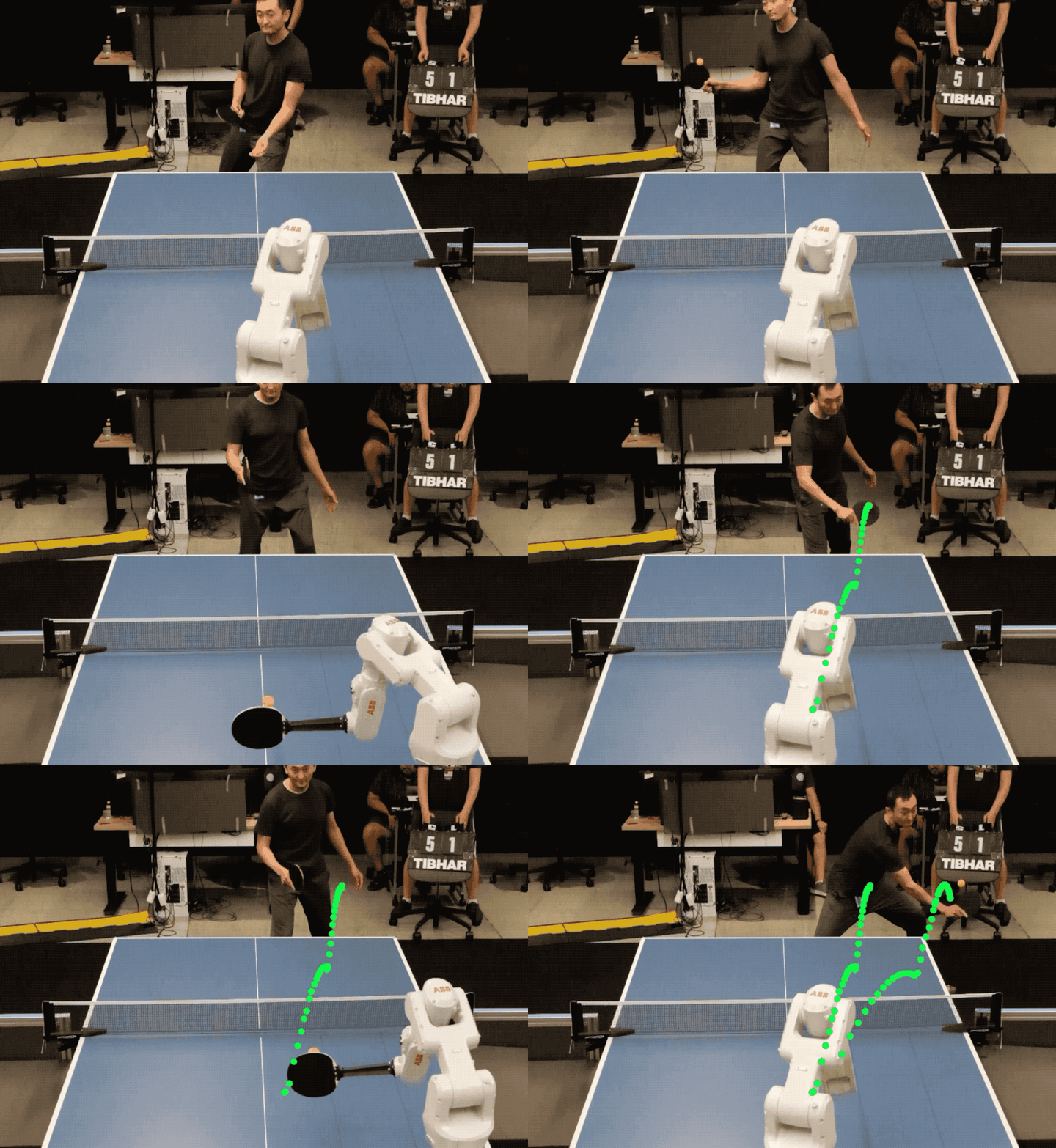
Google’s DeepMind Robotics team has successfully developed a robot capable of playing table tennis at a solid amateur level, marking a significant milestone in human-robot athletic interaction, as detailed in their latest research paper. Sports have historically served as a critical benchmark for robotics, with table tennis—a game demanding high-speed responsiveness, precise motor control, and strategic planning—acting as a primary testing ground since the 1980s.
Putting the Robot to the Test
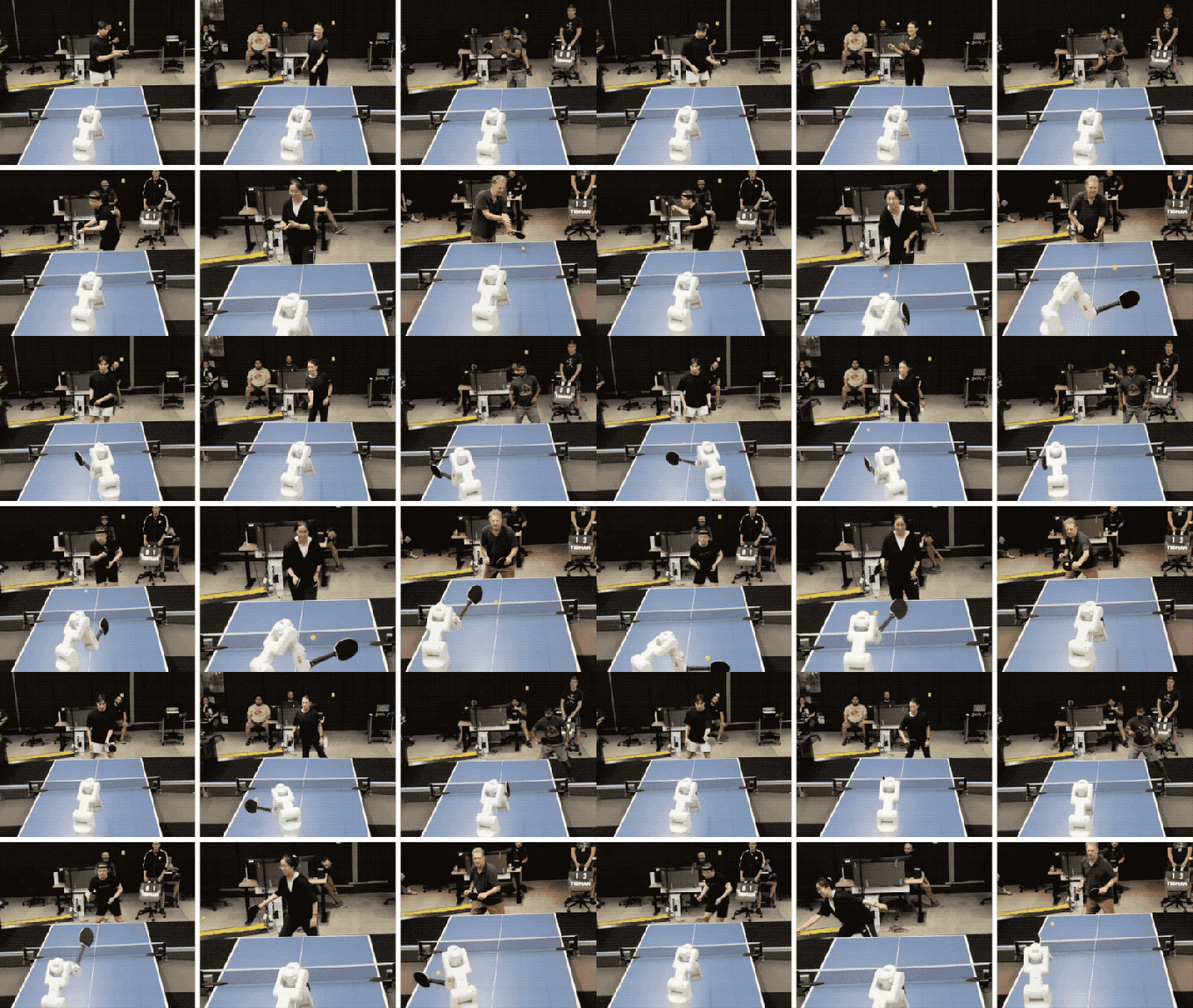
In the study titled “Achieving Human Level Competitive Robot Table Tennis,” researchers pitted the machine against human opponents of varying skill levels. The results showed promise: the robot remained undefeated against beginner-level players and managed to secure victory in 55% of matches against intermediate opponents. However, the system struggled against advanced players, failing to win a single game. Overall, the robot maintained a 45% win rate across 29 competitive matches.
Robotic table tennis has served as a benchmark for this type of research since the 1980s.
The robot has to be good at low level skills, such as returning the ball, as well as high level skills, like strategizing and long-term planning to achieve a goal. pic.twitter.com/IX7VuDyC4J
— Google DeepMind (@GoogleDeepMind) August 8, 2024
A Milestone in Robotics
According to the research team, this is the first agent capable of competing against humans in a sport at a human level. While the achievement is notable, the paper emphasizes that this is merely a stepping stone toward the ultimate robotics goal: creating generalist machines that can perform complex, real-world tasks safely while interacting with humans.
Technical Hurdles and Future Development
Despite its progress, the system faces clear limitations. The primary challenges include processing fast-moving balls, which the researchers attribute to system latency, mandatory reset periods between shots, and a lack of diverse training data. To improve performance, the team is exploring advanced control algorithms and hardware upgrades, such as predictive trajectory modeling and faster communication protocols between sensors and actuators.
Beyond the table, the researchers noted that the system still struggles with high and low balls, backhand returns, and the complex task of reading ball spin. Nevertheless, the project offers valuable insights into policy architecture, the efficacy of using simulations for real-world gameplay, and the robot’s ability to adjust its strategy in real time—all of which are essential components for the future of general-purpose robotics.