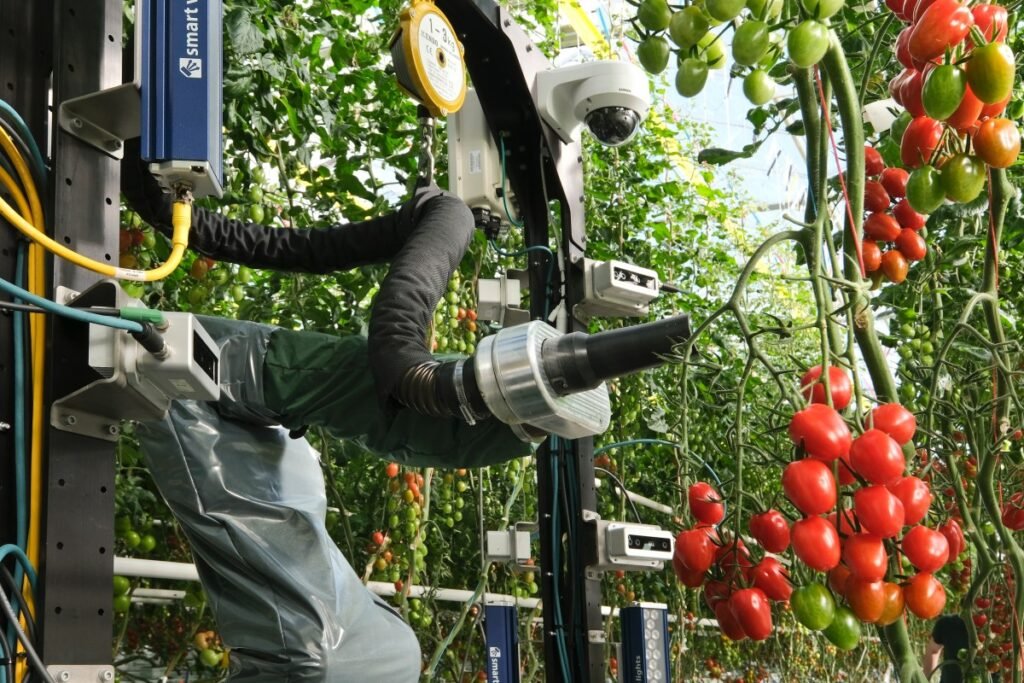
Pittsburgh-based startup Four Growers has secured $9 million in Series A funding to scale production of its harvesting robots, aiming to alleviate critical labor shortages in the greenhouse industry. Led by Basset Capital, with support from Y Combinator and Ospraie Ag Science, this latest round brings the company’s total venture backing to $15 million. CEO Brandon Contino confirmed that the capital will be directed toward accelerating manufacturing to meet the surging market demand for their automation technology.
Strategic Growth Amid Industry Volatility
The funding news arrives shortly after the collapse of high-profile indoor farming startup Bowery Farming, which shuttered operations following crop diseases and unsustainable margins. Reflecting on the sector’s challenges, Contino noted that vertical farming remains a capital-intensive and difficult model. Four Growers intentionally bypassed the operator route, choosing instead to develop specialized technology for existing farms, which the company identified as a more viable and scalable market opportunity.
The Competitive Landscape of AgTech
Four Growers enters a crowded field of innovators striving to modernize agriculture through robotics. Competitors like Carbon Robotics have already attracted substantial interest, raising $143 million in venture capital. The sector has also seen significant exits, with industry giants like John Deere acquiring players such as Blue River Technology and Bear Flag Robotics. Meanwhile, startups like Seso are approaching the labor crisis from a human-resources perspective, focusing on streamlining the recruitment of migrant workers.
Beyond Harvesting: The Future of Farm Automation
While the company currently focuses on greenhouse harvesting, Contino revealed plans to broaden the scope of their technology. The roadmap includes expanding capabilities beyond harvest tasks and eventually transitioning into outdoor farming applications in the near future.
Redefining Labor in Agriculture
Contino emphasizes that the goal of their robotic systems is not to replace human workers, but to provide essential augmentation. As the agricultural workforce continues to shrink and the physical demands of the job become harder to fill, these robots aim to elevate workers into more comfortable, supervisory roles. This shift empowers a single individual to manage significantly higher volumes of production, ensuring the long-term sustainability of greenhouse operations.