Figure, a Bay Area robotics startup, will launch alpha testing for its Figure 02 humanoid robot in residential settings by late 2025, according to CEO Brett Adcock. The accelerated timeline is driven by the company’s new proprietary “generalist” Vision-Language-Action (VLA) model, known as Helix, which significantly speeds up the system’s ability to learn and execute new tasks.
The Power Behind Helix
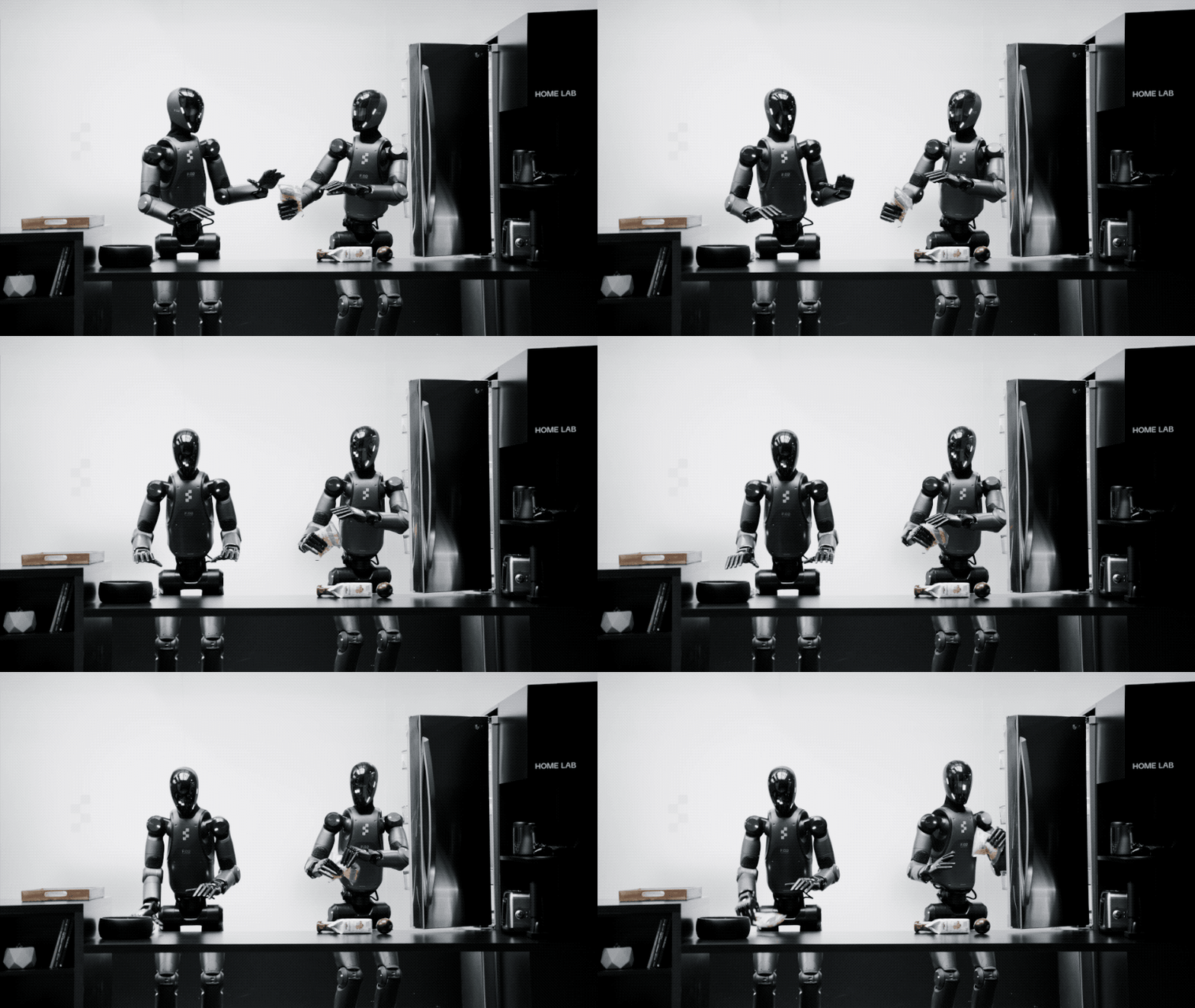
Adcock’s announcement follows the recent unveiling of the Helix machine learning platform, which processes visual data and natural language input simultaneously. This shift marks a strategic pivot for Figure, which recently ended its high-profile partnership with OpenAI to focus on developing its own in-house AI architectures like Helix. The technology is specifically engineered to coordinate multiple robots working in tandem on complex assignments.
Moving From Lab to Living Room
While the home environment has long been a part of Figure’s long-term roadmap, recent demonstrations have showcased the robots performing household chores, such as food preparation, in lab-simulated settings. Despite this progress, Figure—like many of its competitors—has previously prioritized industrial applications. The company is currently piloting its humanoid systems at a BMW manufacturing plant in South Carolina, leveraging the structured, controlled nature of factories as a safer testing ground than the unpredictable residential environment.
The Challenges of Domestic Robotics
The race to bring humanoids into the home is heating up, with companies like Tesla and Apptronik also vying for a foothold. Industry experts view these robots as a critical solution for aging populations in the U.S. and Japan, potentially allowing seniors to maintain independence longer. However, the transition to the home remains technically daunting. Startups like Norway-based 1X are among the few prioritizing residential use, navigating obstacles such as inconsistent lighting, varied floor surfaces, stairways, and the chaotic nature of pets and children.
What to Expect in 2025
While Figure has confirmed its 2025 testing window, the scope of these trials remains limited. The designation of “alpha” testing indicates that the deployment will stay in the early, experimental stages for the remainder of the year as the company refines the robot’s ability to navigate the complexities of daily life.