Google announced on Wednesday the launch of Lyria 3 Pro, a sophisticated music generation model that arrives just one month after the debut of the standard Lyria 3. This upgraded model significantly expands creative capabilities by enabling users to generate full musical tracks of up to three minutes in length, a substantial increase over the 30-second limit imposed on the previous version.
Advanced Customization and Structural Control
Beyond extending track duration, the Lyria 3 Pro model introduces refined creative control and deeper customization options. The model features an enhanced understanding of musical architecture, allowing users to explicitly define structural components such as intros, verses, choruses, and bridges within their prompts.
Expanded Availability Across Gemini and Enterprise Suites
Following the integration of Lyria 3 into the Gemini app, the Pro version is now rolling out to the same platform, though access is restricted to paid subscribers. Furthermore, Google is expanding the reach of Lyria 3 Pro by integrating it into Google Vids and ProducerAI—the GenAI-powered music production tool acquired by the company last month.
Enterprise customers are also gaining access to these capabilities. Lyria 3 Pro is currently available in public preview via Vertex AI, the Gemini API, and AI Studio, providing businesses with robust tools for automated music generation.
Ethical Training and Content Labeling
Google confirmed that the model was trained using a combination of partner data and permissible content from YouTube and internal sources. Addressing concerns regarding artistic imitation, the company stated that the model does not directly mimic specific artists. Instead, it draws “broad inspiration” if an artist is mentioned in a user’s prompt.
To maintain transparency, all audio produced by both Lyria 3 and Lyria 3 Pro is automatically embedded with SynthID, a digital watermark identifying the content as AI-generated.
The Evolving Landscape of AI Music
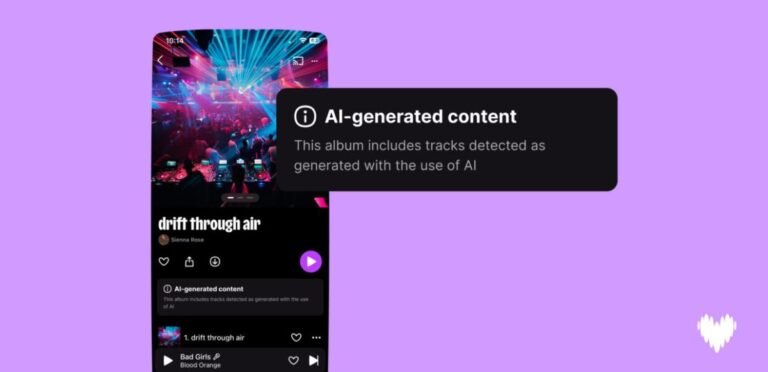
The release arrives amid heightened industry focus on AI-generated audio. Earlier this week, Spotify introduced new tools allowing artists to audit songs attributed to them to combat unauthorized AI misattribution. Similarly, Deezer has deployed technology designed to help streaming services identify and tag AI-generated tracks.