
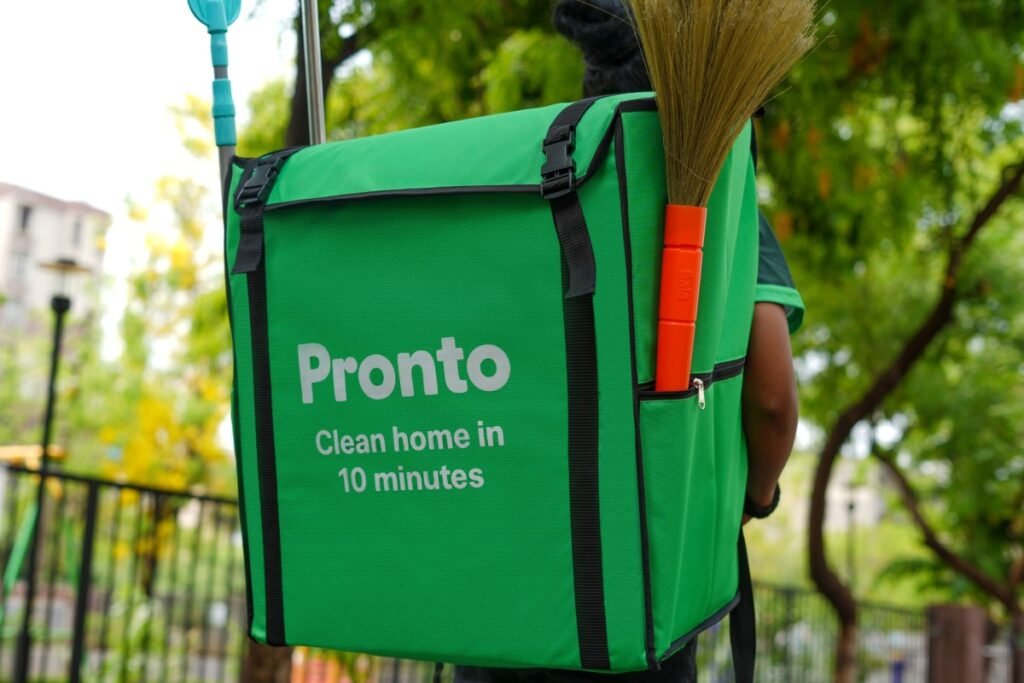
Bain Capital is backing the Indian domestic services startup Pronto, an ambitious venture aiming to disrupt the market by offering workers significantly higher wages than local industry standards. By promising earnings of approximately ₹22,000 ($258) per month—with potential performance bonuses pushing that figure up to ₹26,000 ($304)—Pronto is positioning itself as a premium alternative in a sector historically plagued by low pay and exploitation.
These compensation levels far exceed the average earnings for domestic helpers in the Delhi-NCR region, which hover around ₹9,000, according to the International Domestic Workers Federation (PDF). Founder Sardana emphasizes that the startup also functions as a protective agency, providing a critical safety net for workers facing abuse or exploitation—a persistent issue for domestic helpers across India for decades.
The Quick-Service Model: Speed as a Commodity
In a market where convenience is king, Pronto is banking on the “instant gratification” economy. Sardana believes that urban Indian consumers are increasingly unwilling to wait for household services, prioritizing immediacy over traditional scheduling.
“When they need something, they need it right away,” Sardana noted. “For that customer, having 10 minutes of service is huge because they no longer have to plan ahead.”
Since piloting in Gurugram last December and launching its first hub in March, the model has gained traction. The company reports that 70% of its initial user base has already returned for repeat services within a two-week window. Currently operating two hubs in Gurugram, Pronto serves a tight two-mile radius, with 70% to 80% of demand originating within just 500 meters of its facilities.
Eschewing the Commission Model
Unlike typical gig-economy platforms that rely on commission-based structures, Pronto pays its workers for four-hour shifts on a bi-weekly cycle, retaining the full service fees charged to customers. Looking ahead, the company aims to move to weekly payouts and introduce flexible payment options to better serve workers in an otherwise unorganized labor market.
“Eventually, we are going to build a lot of ‘almost-fintech’ products for workers to provide services that they need, as a lot of these people struggle to access those resources otherwise,” Sardana explained. The startup is also preparing to launch a dedicated health insurance product for its staff in the near future.
To maintain service quality and security, Pronto conducts rigorous in-house training alongside government ID, police, and court record verifications. The company also implements a feedback loop to provide continuous upskilling for its workforce.
With sights set on rapid growth, Pronto plans to open 10 new hubs in Gurugram over the next three months. The company intends to scale its network from 150 to 700 workers and expand its corporate staff to 50 members. While the current focus remains on cleaning and laundry, the long-term roadmap includes diversifying its service offerings and entering major markets like Mumbai and Bengaluru.