
ComfyUI, the node-based workflow platform for diffusion models, has secured $30 million in new funding, catapulting the startup to a $500 million valuation as creators demand deeper control over AI-generated media.
A Strategic Investment in Creative Precision
The latest funding round was spearheaded by Craft Ventures, with significant backing from Pace Capital, Chemistry, and TruArrow. This capital injection follows a robust growth trajectory for the startup, which previously raised $19 million in Series A financing in late 2024 from investors such as Chemistry Ventures, Cursor Capital, and Vercel founder Guillermo Rauch.
From Open-Source Project to Industry Standard
Launched in 2023, ComfyUI emerged as an open-source solution shortly after the initial wave of diffusion models. At that time, tools like Midjourney and DALL-E were plagued by functional errors, including frequent anatomical mistakes like rendering extra fingers. The project’s founders introduced a modular framework to solve these shortcomings, granting creators granular authority over every stage of the generation process.
Solving the “Slot Machine” Problem of AI Prompts
Despite rapid advancements in AI models, the need for precision remains critical. ComfyUI co-founder and CEO Yoland Yan notes that standard prompt-based solutions often hit a plateau. “If you think about your typical prompt-based solution, like Midjourney or ChatGPT, you ask for something, it gets only 60% – 80% there,” Yan explained. “But to change that remaining 20%, you have to try this slot machine.”
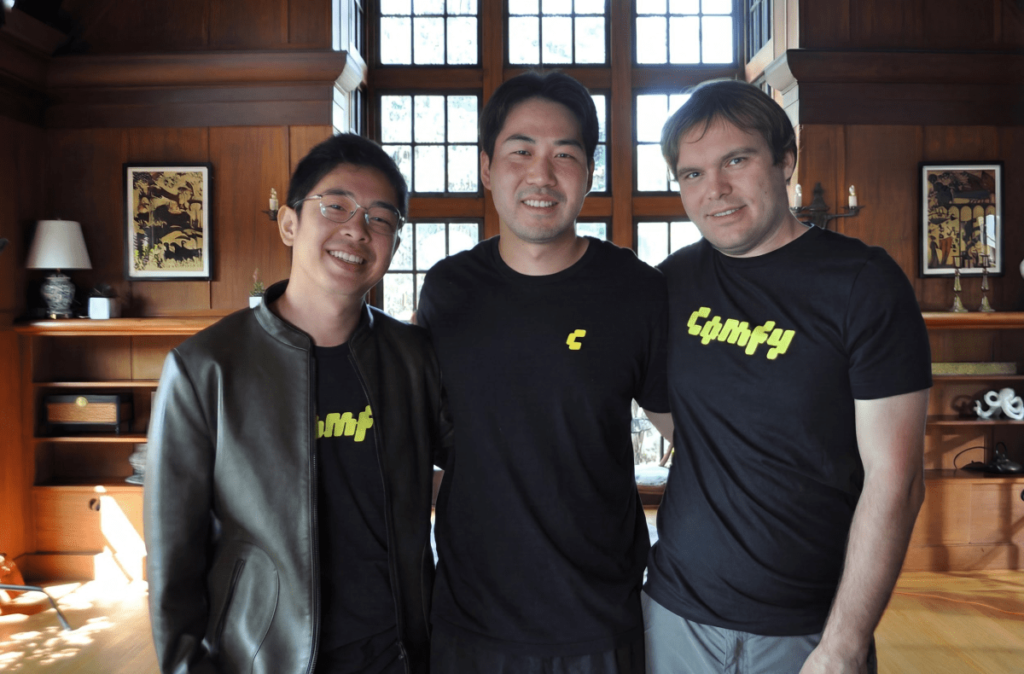
Yan (pictured left) argues that relying solely on prompts is akin to gambling, as small adjustments can inadvertently overwrite successful elements of an image. ComfyUI’s node-based interface eliminates this unpredictability by allowing users to link specific components, ensuring full control over the final output—a nuance impossible to capture in a simple text box.
Mass Adoption Among Creative Professionals
The platform has already garnered a massive following, boasting over 4 million users across sectors including animation, visual effects, advertising, and industrial design. The demand is so high that studios are now listing “ComfyUI artist or engineer” as specific job titles.
As the market becomes saturated with automated AI content, Yan believes the “human-in-the-loop” approach provided by ComfyUI is the future. While competitors like Weavy—recently acquired by Figma—vie for market share, ComfyUI remains focused on its mission to provide the precision required to cut through the noise of generic AI output.