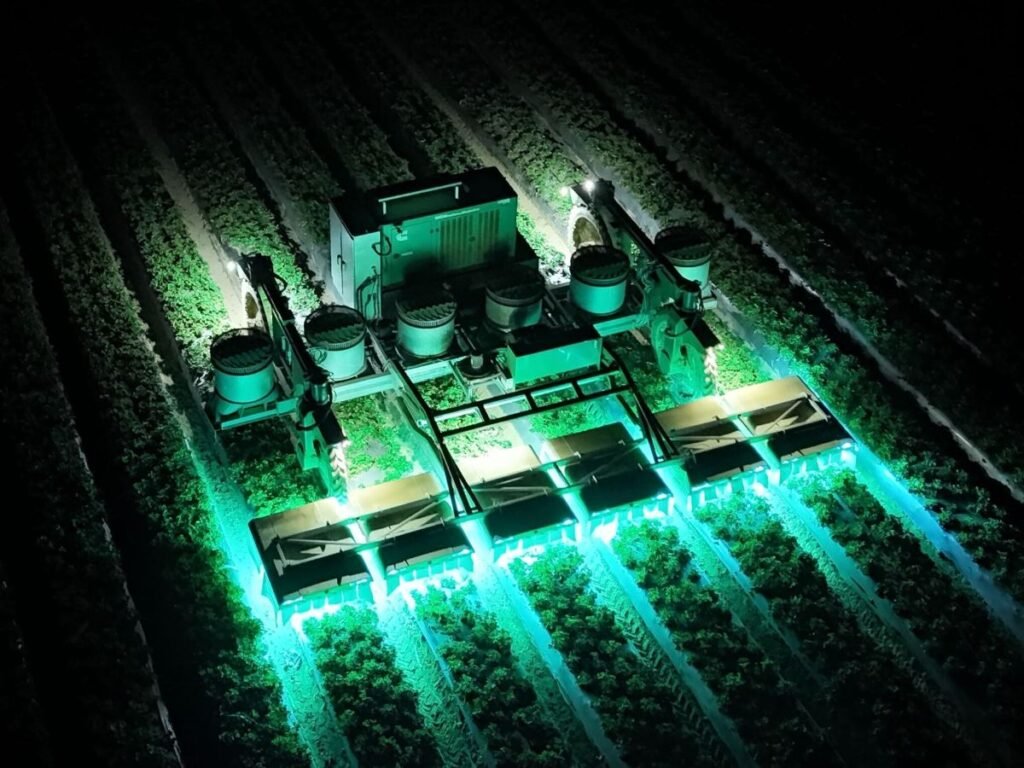
TRIC Robotics has secured $5.5 million in seed funding to scale its autonomous UV-light technology, designed to significantly reduce chemical pesticide reliance in strawberry farming.
From Lab Research to Field Reality
The journey began when founder Stager reached out to the United States Department of Agriculture (USDA) to identify promising research that remained trapped in laboratory settings. His background in PhD-level research fueled a desire to bridge the gap between academic innovation and commercial application.
Through a specialized USDA program designed to pair scientists with entrepreneurs, Stager discovered the UV light technology that would eventually anchor the company’s robotics platform.
The Humble Beginnings of an Agricultural Revolution
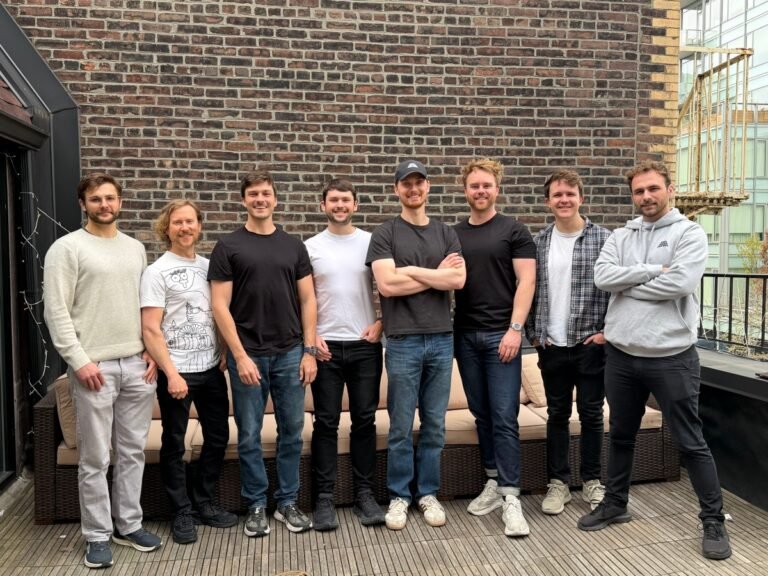
“We loaded two robots that we built in my garage on top of the SUV,” Stager recalled of the early days alongside co-founder Vishnu Somasundaram. “We had two connections that the USDA helped us build with farmers that were willing to give us just a tiny little piece of land in 2021 and that’s really the beginning of when this company started.”
The startup’s origin story involved an intense eight-month, cross-country journey. While navigating Airbnb stays, the team deployed their first two robots, gathering critical data directly from farmers to validate their technology in real-world conditions.
Scaling Operations and Future Growth
Today, the company—which includes co-founder Ryan Berard—has moved well beyond the garage phase. TRIC Robotics now collaborates with four major strawberry producers, maintains a fleet of nine active robots, and is preparing to deploy three additional units.
The recent $5.5 million seed round was led by Version One Ventures, with additional backing from Garage Capital, Todd and Rahul Capital, Lucas Venture Group, and a roster of individual angel investors.
Expanding the Reach of AgTech
TRIC Robotics intends to utilize the new capital to expand its autonomous fleet. While strawberries are the current focus, the company has set its sights on integrating this UV-light technology into other crop varieties in the near future.
“I think there is going to be a really, really bright future for [agriculture] tech,” Stager said. “I just think people should know that things are really headed in a great direction, and there’s really a lot of exciting things to come.”