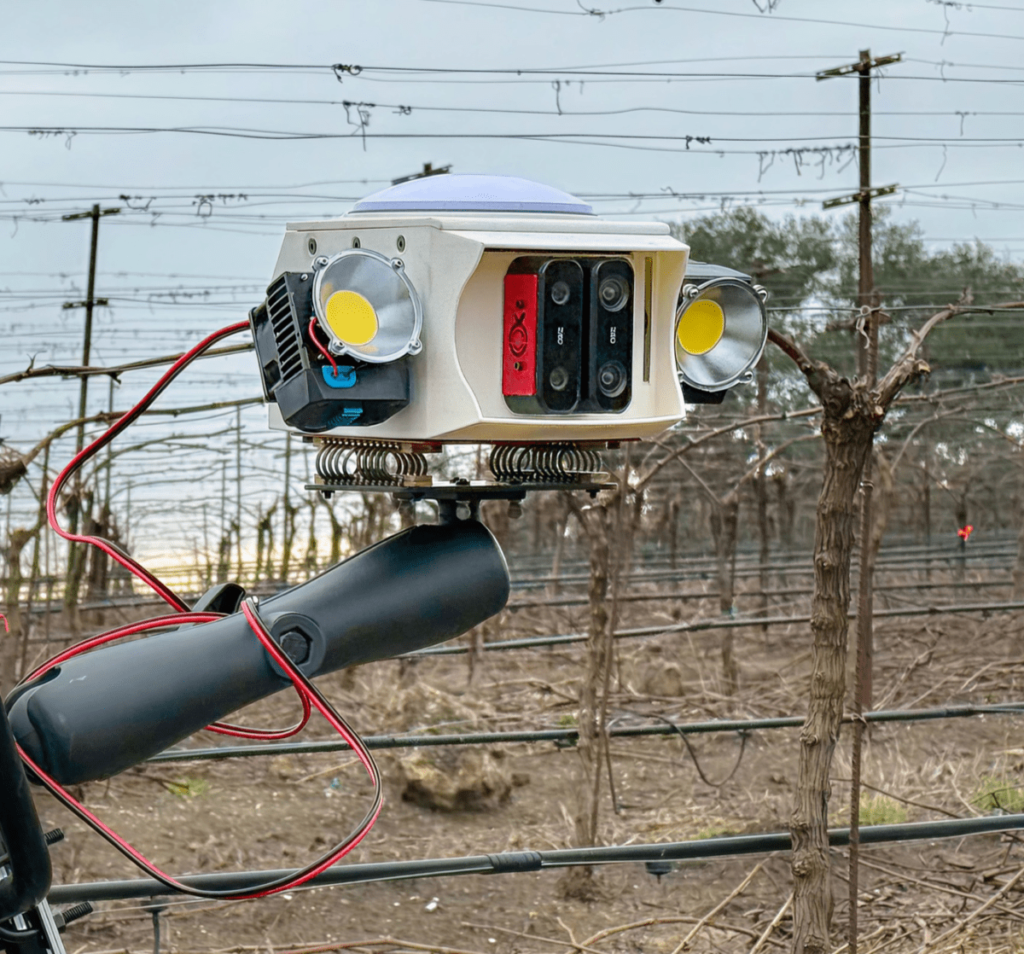
Orchard Robotics, a startup led by a Thiel fellow and Cornell dropout, has secured $22 million in funding to scale its AI-powered computer vision technology designed to optimize specialty crop management.
Transforming Data into Agricultural Action
The company’s system functions by uploading data directly into its cloud-based software. This platform serves as a centralized record-keeping hub, enabling farmers to make precise, data-driven decisions regarding which vines or trees require specific interventions, such as fertilization, pruning, or thinning.
Rapid Expansion Across Specialty Crops
Orchard is already operational across several of the largest apple and grape farms in the United States. Following its initial success, the startup has recently broadened its technological reach to support growers of blueberries, cherries, almonds, pistachios, citrus, and strawberries.
The Competitive Landscape
The sector for tractor-mounted AI cameras is becoming increasingly crowded. Orchard faces direct competition from firms like Bloomfield Robotics—which was acquired by Kubota last year—as well as emerging seed-stage players like Vivid Robotics and Green Atlas.
Vision for Autonomous Farming
While CEO Charlie Wu acknowledges that the current market for fruit and vegetable data analysis is valued at approximately $1.5 billion, he anticipates that rapid AI advancements will soon enable the technology to execute autonomous decisions, significantly diversifying the startup’s product portfolio.
Scaling Toward an Agricultural Operating System
Wu aims to replicate the trajectory of Flock Safety, a public safety startup currently valued at $7.5 billion. Much like Flock evolved from basic license plate recognition to complex gunshot detection and surveillance, Orchard intends to move beyond simple data collection.
“Our ambition is to be a lot more than just collecting data,” Wu stated. “We want to collect the data, then build an operating system on top of the data, and then eventually own all the workflows in the farm, and that’s going to have the potential to expand our market by quite a bit.”