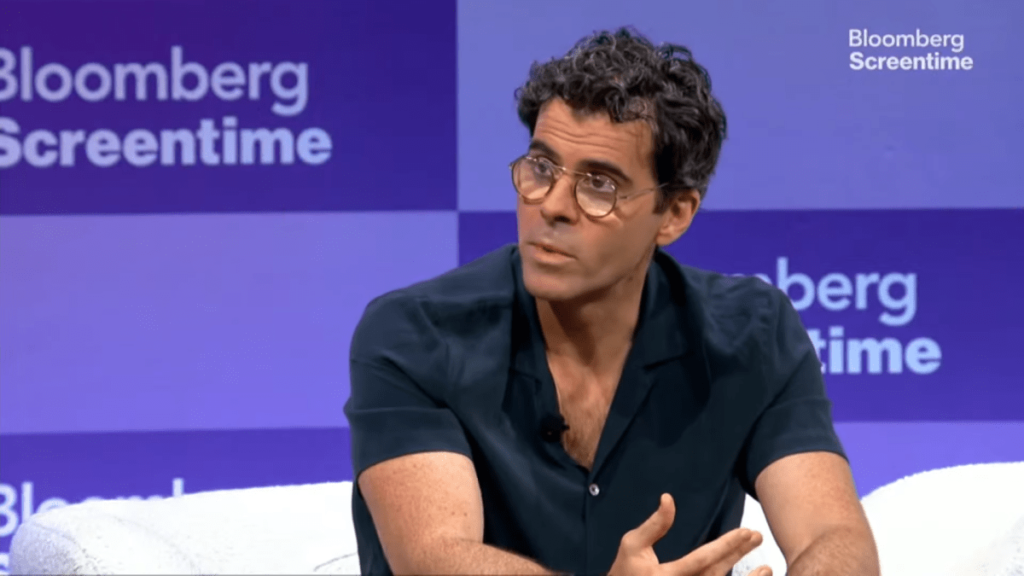
Instagram head Adam Mosseri has pushed back against recent AI fears voiced by creator MrBeast, arguing that while platforms play a role, society must fundamentally adapt to a reality where digital content can no longer be taken at face value.
The Future of AI Fact-Checking
While Mosseri did not specify technical details, he hinted at the integration of crowdsourced context, likely referencing Meta’s Community Notes—a system recently launched in the U.S. to mirror the functionality found on X. By empowering users with opposing viewpoints to provide corrections or additional context, Meta aims to bypass traditional third-party fact-checkers. This system is currently being evaluated as a primary method for flagging AI-generated content that lacks proper disclosure.
A Necessary Evolution for Society
Rather than placing the entire burden of content verification on platform algorithms, Mosseri emphasized that the responsibility lies with societal education. He underscored the urgency of teaching younger generations to be skeptical of what they consume online.
“My kids are young. They’re nine, seven, and five. I need them to understand, as they grow up and they get exposed to the internet, that just because they’re seeing a video of something doesn’t mean it actually happened,” he explained. “When I grew up, and I saw a video, I could assume that that was a capture of a moment that happened in the real world.”
“What they’re going to… need to think about is who is saying it, who’s sharing it, and what are their incentives, and why might they be saying it,” Mosseri added.
Instagram’s Strategic Shift
Beyond the AI debate, Mosseri outlined the platform’s broader roadmap, which includes exploring a dedicated TV app. He reaffirmed that Instagram’s current focus on Reels and Direct Messages is a direct response to evolving user behavior and consumption trends.
The TikTok Factor
Addressing the competitive landscape, Mosseri noted that TikTok’s presence in the U.S. has served as a catalyst for Instagram to improve its own output. Regarding the recent changes in TikTok’s U.S. ownership, he suggested the impact on the user experience remains minimal.
“It’s the same app, the same ranking system, the same creators that you’re following—the same people. It’s all sort of seamless,” Mosseri said. “It doesn’t seem like it’s a major change in terms of incentives.”