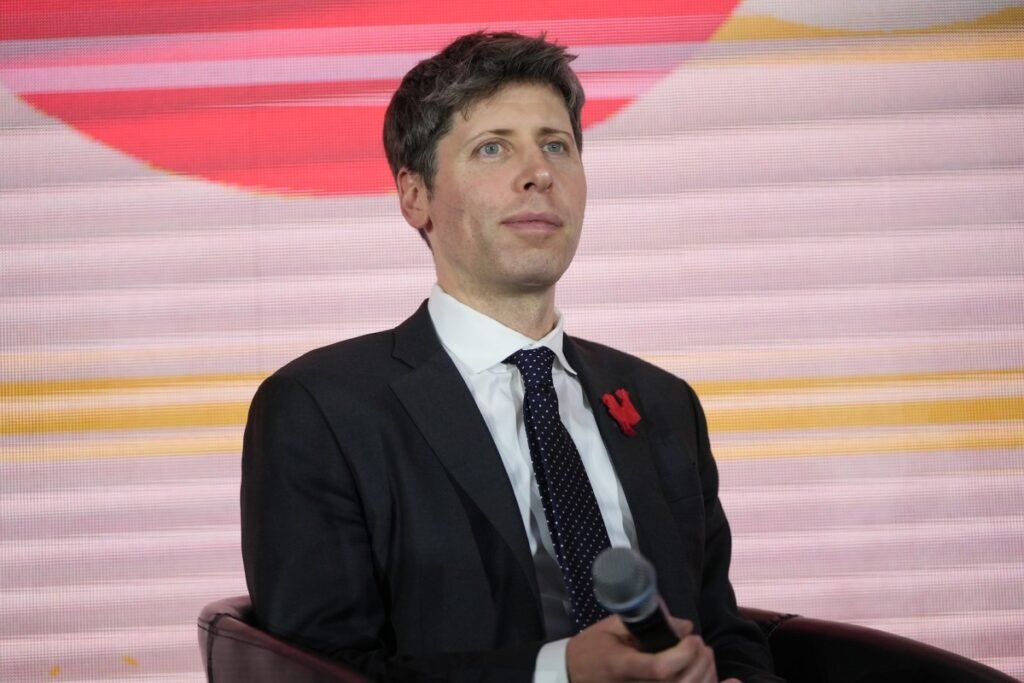
Keach Hagey, biographer and veteran journalist, argues that OpenAI CEO Sam Altman’s unique ability to bridge the gap between visionary promises and political deal-making makes him a figure “born for this moment.” In a deep dive into Altman’s career, Hagey explores the patterns of distrust, the fragility of OpenAI’s governance, and the personal history that drives one of tech’s most influential leaders.
The Art of the Deal and the Trust Gap
When addressing the persistent questions regarding Altman’s trustworthiness, Hagey paints a picture of a master salesman. “He’s really excellent at getting in a room and convincing people he can see the future,” Hagey notes. While this talent is a prerequisite for leading major tech companies, it often leads to a disconnect between his rhetoric and the reality on the ground—a pattern observed across his tenures at Loopt, Y Combinator, and OpenAI.
Hagey highlights that this “salesman” persona often masks underlying management challenges, particularly regarding conflict resolution. Altman’s tendency to tell people what they want to hear has historically triggered instability within executive ranks, mirroring the chaotic boardroom drama that famously led to his brief ousting from OpenAI.
Governance and the Reality of Power
Regarding the high-profile firing of Altman, Hagey suggests the incident exposed a fundamental flaw in the nonprofit governance model. “The big picture is that the nonprofit governance structure is not stable,” she explains. Even with legal documents limiting investor control, the sheer weight of stakeholders—specifically Microsoft—proved that power dynamics often override written agreements.
Looking ahead, Hagey believes OpenAI’s shifting corporate structure will continue to create friction. “You have a nonprofit board that controls a for-profit company, and that fundamentally unstable arrangement is what led to the so-called Blip,” she asserts. For investors, this lack of control remains a significant hurdle, potentially posing an existential challenge if the company continues to require massive capital injections.
The Political Evolution of an AI Titan
Hagey draws intriguing parallels between Altman and the mid-20th-century architects of industrial innovation, such as those at Bell Labs. Altman has long advocated for government-backed AI infrastructure, a vision currently manifesting through large-scale data center projects in the U.S. and abroad.
Interestingly, Altman has successfully navigated the polarized landscape of U.S. politics by focusing on common ground. “Sam Altman has been born for this moment because he is a deal maker and Trump is a deal maker,” Hagey says. By aligning his massive infrastructure goals with the political appetite for state-backed industrial growth, Altman has effectively sidelined the more contentious debates surrounding AI safety in favor of aggressive expansion.
Family Roots and Personal Drive
The biography also delves into the personal history that shaped Altman’s psyche. Hagey credits his father’s idealism regarding public-private partnerships and his mother’s intense professional ambition as key pillars of his character. Furthermore, growing up as a young gay man in the Midwest provided Altman with early lessons in resilience and societal progress.
“He’s watched society develop and progress in very tangible ways, and I do think that has helped solidify his faith in progress,” Hagey observes. This inherent optimism, combined with an early-life struggle with anxiety, creates a complex profile of a leader who is simultaneously a pragmatic deal-maker and a firm believer in the transformative power of technology.
The Hype Universe: Doomers vs. Boomers
When asked about the extreme divide between AI utopians and those predicting existential catastrophe, Hagey views the conflict as symbiotic. “I see the doomers and the boomers feeding off each other and being part of the same sort of hype universe,” she explains. While she began her research as a skeptic regarding the transformative economic power of AI, her perspective has shifted as the technology has matured and become a more integrated tool in her own daily workflow.