
Muse, the AI app developed by Meta, is experiencing a remarkable surge in popularity, thanks in large part to the company’s strategic promotion at the recent Meta Connect developer conference and early accolades highlighting its sophisticated design and powerful underlying AI model.
Since its launch on September 8, Muse has seen its download numbers skyrocket from 2.5 million to over 3.4 million, according to recent estimates from market analytics firm Sensor Tower.
These figures are based on estimates from Thursday and may not fully reflect the app’s recent surge in popularity following the promotional push at Meta Connect, where new features for Muse were announced. Upcoming enhancements include video chat with the Muse avatar, Mac computer support, a dedicated email address, additional partnerships, and integration plans with smart glasses.
Other analytics firms have reported varying download estimates for Muse, with Apptopia suggesting that the app has reached 4.3 million downloads, of which approximately 2.6 million occurred on iOS devices alone. Meanwhile, Appfigures reports around 2.3 million installs, nearly evenly divided between iOS and Android platforms.

Following the Meta Connect event, Sensor Tower reported a significant increase in daily active users, which rose by 27% on the Wednesday after the conference concluded. Prior to the event, Muse had already demonstrated strong growth, achieving around 2.8 million downloads in its first two weeks, averaging a notable 55% day-over-day increase in downloads. In comparison, ChatGPT saw a 24% growth rate in its first 10 days post-launch, while the launches of Claude and Grok experienced a decline in download growth.
On September 18, Muse reached the top position on the U.S. App Store and maintained that rank, while also claiming the number one spot on the Google Play Store by September 19.
Much of Muse’s growth can be attributed to organic downloads, but the app is also benefiting from the same cross-promotion strategy that propelled Meta’s Instagram Threads to over 500 million monthly active users. Meta is actively marketing Muse to its existing user base on Facebook and Instagram.
Connor Hayes, Meta’s Head of Threads, explained that the marketing strategy for Muse is distinct from that of Threads. While Threads benefits from user-generated content that Meta can match to users’ interests, the challenge with Muse is to create promotional content that effectively demonstrates the AI agent’s capabilities in a way that is relevant and useful to users.
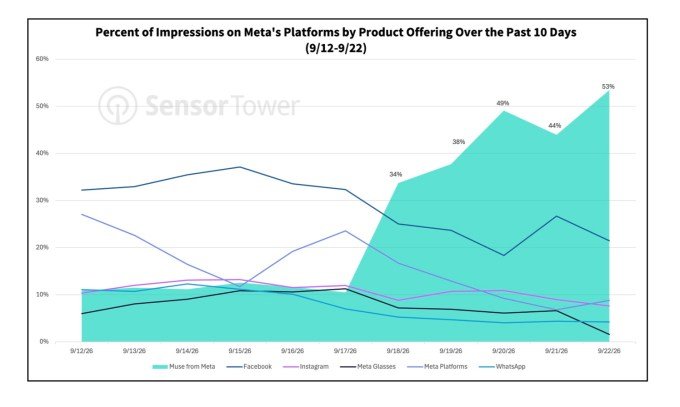
Data from Sensor Tower indicates that Meta began running house ads for Muse on September 9, just a day after its launch. Within a mere 10 days, Muse became the primary focus of house advertising across Meta’s platforms, surpassing promotions for Facebook, Instagram, and WhatsApp. Additionally, Meta has started advertising Muse on mobile ad networks and platforms such as Reddit, TikTok, and YouTube.
By September 22, Muse ranked among the top 10 brands for advertising expenditure, according to Sensor Tower. However, it’s important to note that only 6% of the ad impressions from launch to September 19 can be attributed to Meta’s advertising efforts, indicating that organic traction plays a significant role in Muse’s growth.