
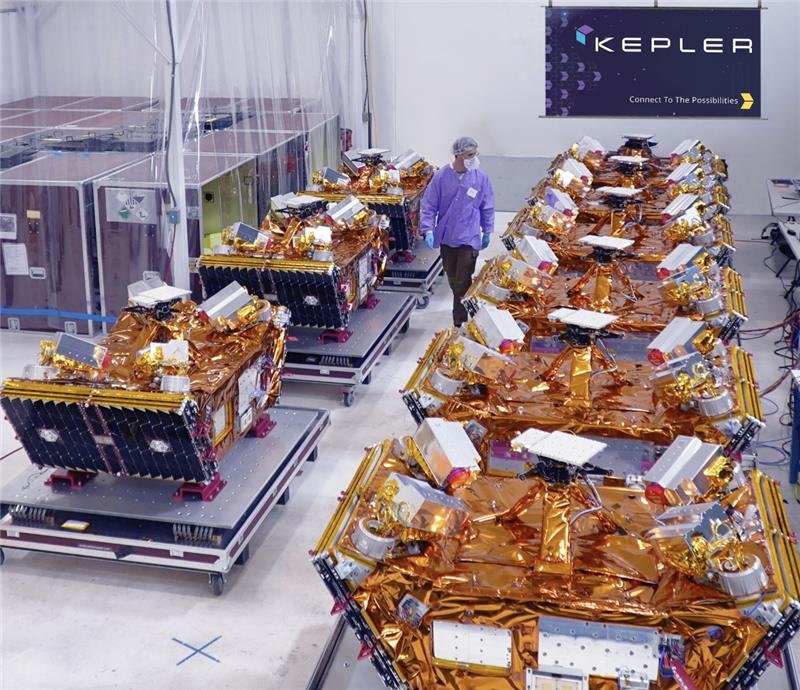
Kepler and Sophia have officially launched the world’s largest orbital compute cluster, creating a new paradigm for satellite data processing that prioritizes real-time edge computing over traditional ground-based relay. By offloading resource-heavy tasks—such as synthetic aperture radar processing—directly to space-based assets, the companies are providing a critical solution for high-demand defense and surveillance applications.
Revolutionizing Military and Defense Capabilities
Satellite operators are already pivoting their future infrastructure to support this decentralized model. The U.S. military has emerged as a primary beneficiary, particularly as it develops advanced missile defense systems that rely on the immediate detection and tracking of threats from orbit. Kepler has already validated this operational viability by successfully demonstrating a space-to-air laser link for U.S. government stakeholders.
Edge Processing vs. Earth-Bound Infrastructure
This focus on edge processing—analyzing data at the point of collection—is the primary differentiator for Sophia and Kepler. While major industry players like SpaceX and Blue Origin, alongside emerging startups such as Starcloud and Aetherflux, are focusing on massive, large-scale data centers in space, the Sophia-Kepler model prioritizes efficiency and constant utilization.
The Strategy Behind Distributed GPUs
“Because we have the belief it’s more inference than training, we want more distributed GPUs that do inference, rather than one superpower GPU that has the training workload capacity,” Mitry explained. He emphasizes that traditional, power-hungry processors often sit idle, whereas their orbital GPU architecture is designed to maintain 100% operational efficiency, maximizing the utility of every kilowatt consumed in space.
Preparing for a Data-Constrained Future
As terrestrial regulations tighten, orbital data centers may become an inevitable necessity rather than just an alternative. Sophia CEO Rob DeMillo notes that recent legislative efforts, including municipal bans on data center construction in Wisconsin and similar discussions within the U.S. Congress, are effectively shrinking the footprint available for land-based computing.
“There’s no more data centers in this [city],” DeMillo noted. “It’s gonna get weird from here.” As Earth-based capacity faces increasing scrutiny and restriction, the space-based alternative is rapidly becoming a more attractive and viable frontier for the global compute industry.